◂ BACK TO GEM ENCYCLOPEDIA
Pearl
Perfect shining spheres. Lustrous baroque forms. Seductive strands, warm to the touch. Pearls are simply and purely organic.
See Gem As
Tools
Research
Abstracts; Fall 1991
This article, from the Fall 1991 issue of Gems & Gemology, is a compilation of abstracts of important gemology-related articles published outside of Gems & Gemology.
Abstracts; Winter 1991
This article, from the Winter 1991 issue of Gems & Gemology, is a compilation of abstracts of important gemology-related articles published outside of Gems & Gemology.
Sweet Home Mine Rhodochrosite from 1888
A rhodochrosite on display at AGTA dates back more than a century to Colorado’s Alma Mining District.
Two Pearls of Indian Cultural Significance
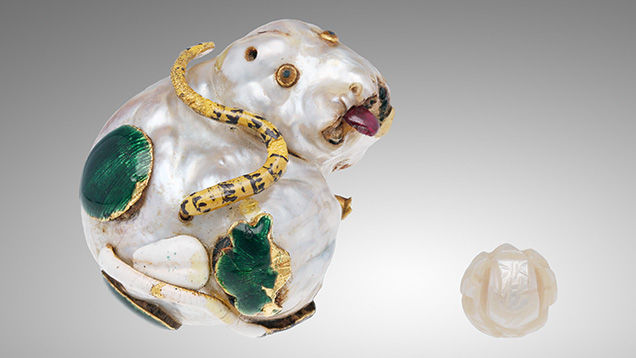
Two pearls representing Indian deities were recently examined in the Mumbai laboratory.
X-ray Computed Microtomography Applied to Pearls: Methodology, Advantages, and Limitations
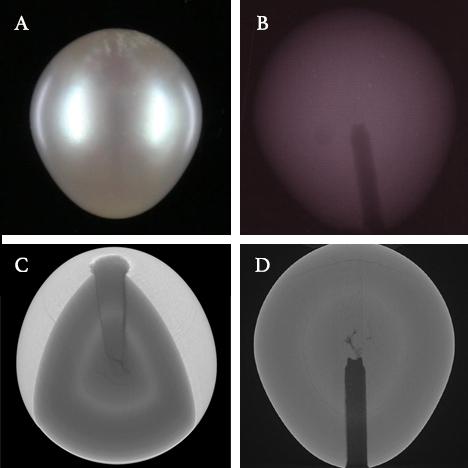
X-ray computed microtomography reveals the internal features of pearls with great detail.
X-ray Computed Microtomography: Distinguishing Natural Pearls from Beaded and Non-Beaded Cultured Pearls
The distinction of natural from cultured pearls traditionally has been based on X-radiography.
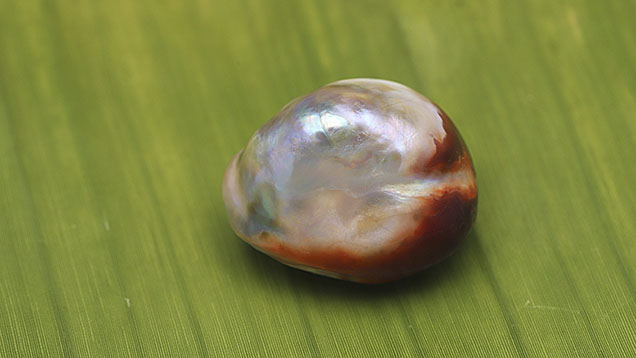
A Large Multicolored Natural Blister Pearl
A large baroque-shaped blister pearl with a unique multicolored appearance is examined in the Mumbai laboratory.
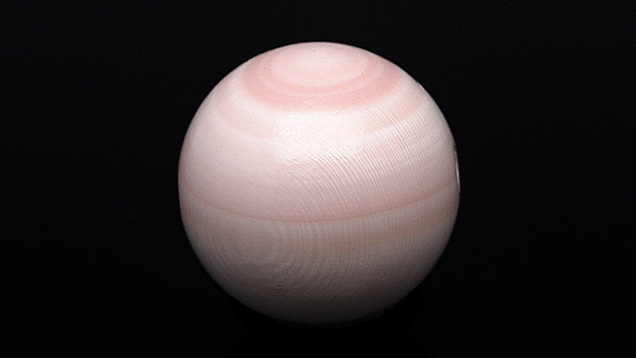
Fashioned Queen Conch Shell Bead
A Queen conch shell bead is submitted for pearl identification to the Mumbai laboratory.
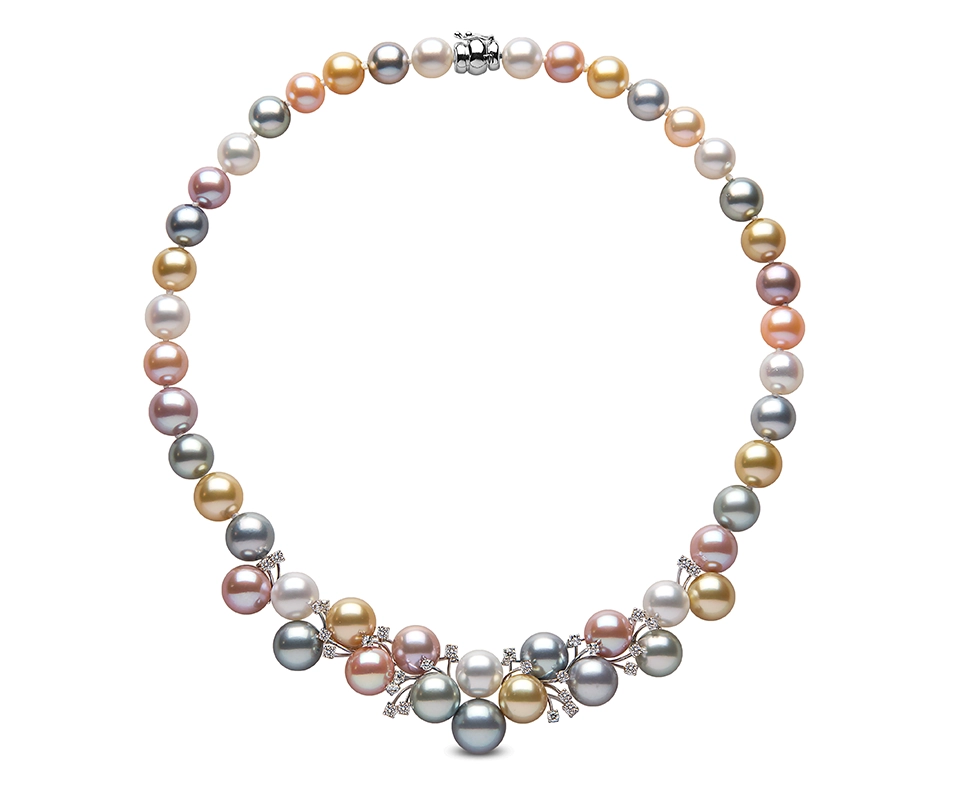
Freshwater Pearls vs. Saltwater Pearls: Understanding the Difference
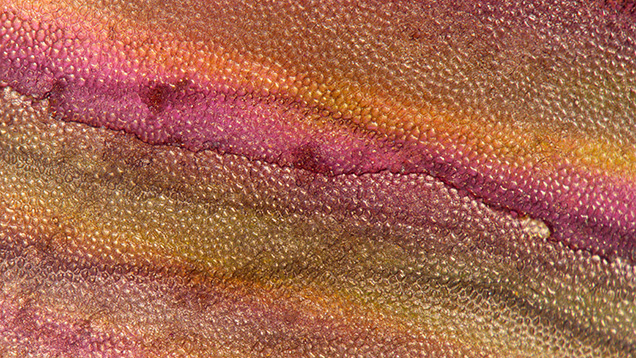
Iridescent Pen Shell
Aragonite and calcite create a captivating iridescent effect in a Pinnidae shell.
Winter 2011 G&G Lab Notes
This section, from the Winter 2011 issue of Gems & Gemology, is a compilation of interesting finds from GIA’s laboratories.