

Opal is renowned for its wide range of colors, from deep blue to intense red to completely black. All bodycolors are caused either by the presence of nanoscale mineral inclusions or chemical elements incorporated directly into the amorphous silica structure. Aside from their contributions to visual appeal, these color-causing compounds are also of scientific interest, as their presence can provide more precise constraints on the local conditions and environment of opal formation.
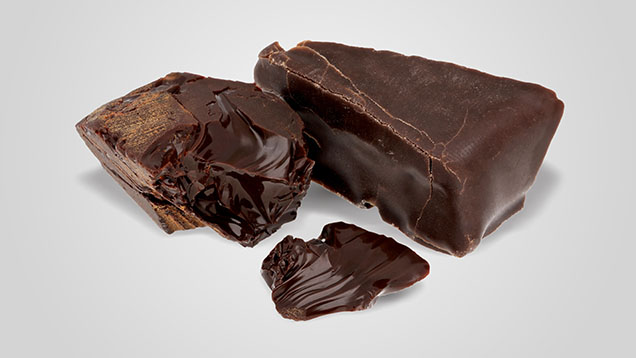
Recently, GIA’s New York laboratory acquired a collection of various rough Ethiopian opals (Wollo and Shewa provinces) for research purposes, displaying a range of bodycolors from colorless to red-orange (so-called “fire opals”). The collection included an exceptional 37.93 ct common specimen with a 4.05 ct small detached fragment, bearing a striking resemblance to a bar of chocolate (figure 1). Both pieces displayed a lustrous appearance on the conchoidal fracture and homogeneous bodycolor throughout the volume, leaning toward red in thinner parts, with slight variation on the surfaces and localized zones of lighter brown color. Standard gemological testing on the larger piece revealed a specific gravity of 2.00 and a spot refractive index of 1.46, typical for opal.
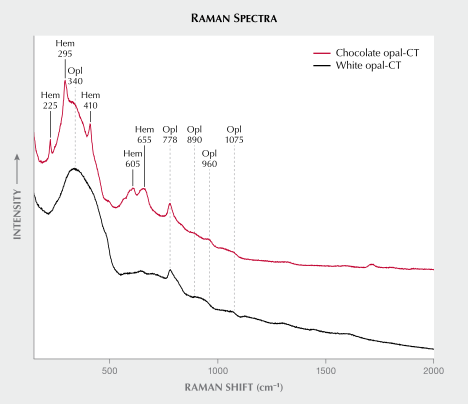
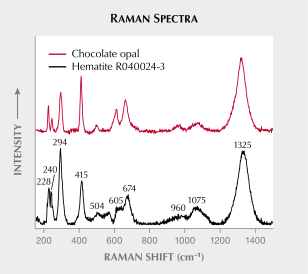
Raman spectroscopy and laser ablation–inductively coupled plasma–mass spectrometry were performed to better characterize this material. With an 830 nm excitation laser, Raman peaks at 340 and 780 cm–1 confirmed the specimen as opal-CT. Faint Raman peaks related to iron oxides were also seen (figure 2). Using a 514 nm laser, the opal signal was almost completely suppressed, enhancing the signal of the iron oxides; these were confirmed as hematite (Fe2O3) (figure 3) (C.P. Marshall et al., “Polarized Raman spectra of hematite and assignment of external modes,” Journal of Raman Spectroscopy, Vol. 51, No. 9, 2020, pp. 1522–1529).
The chemical composition in the major (silicon, oxygen, and water) and main minor elements (sodium, magnesium, aluminum, and calcium) of this chocolate brown specimen falls within the classical range of values established in the literature for the chemistry of Ethiopian opal (B. Rondeau et al., “Geochemical and petrological characterization of gem opals from Wegel Tena, Wollo, Ethiopia: Opal formation in an Oligocene soil,” Geochemistry: Exploration, Environment, Analysis, Vol. 12, No. 2, 2012, pp. 93–104; B. Chauviré et al., “Pedogenic origin of precious opals from Wegel Tena (Ethiopia): Evidence from trace elements and oxygen isotopes,” Applied Geochemistry, Vol. 101, 2019, pp. 127–139). However, certain trace elements such as iron, titanium, manganese, zinc, niobium, lead, and thorium are enriched relative to most Ethiopian opals. Furthermore, there is considerable enrichment in the rare earth elements (REEs) in conjunction with a pronounced and unusual positive cerium anomaly.
The strong positive cerium anomaly (463±14 ppm) relative to most Ethiopian opals (<90 ppm), along with the presence of embedded iron oxides, would indicate that this specimen formed under oxidizing conditions. Ethiopian opals are known to form within volcanic tuffs (compacted ash, also called ignimbrite) of rhyolitic composition that have undergone active soil formation processes (also called pedogenesis). Moreover, the presence of fossils in the surrounding rocks and within the opals themselves indicates that their formation environment was also rich in living organisms (and their organic byproducts); recent research has revealed clues toward an active interaction between opal and these organisms (S. Gouzy et al., “Whitening of fire opal: Transformation of silica in soils,” Chemical Geology, Vol. 616, 2023, article no. 121237). Among other parallel processes that might occur in this complex setting, microbial mediation (i.e., wherein microorganisms facilitate chemical transformations of an environment) has been specifically identified as a possible origin of strong cerium anomalies (B. Chauviré et al., 2019, and references therein) and control overall REE partitioning during opal formation. Therefore, it can be hypothesized that the peculiar chemistry of this opal could be related to an intense, localized microbial activity in its immediate growth environment.
Correlated to the positive cerium anomaly, the chocolate opal is also enriched in europium compared to more common Ethiopian samples. However, this europium enrichment is not accompanied by similarly high concentrations of strontium and barium, a suite previously attributed to feldspar-dominated weathering as the source of chemical elements for opal (B. Chauviré et al., 2019). This suggests that, for this specimen, the predominant source of elements was likely the volcanic glass component of the ignimbrite rather than feldspar phenocrysts.
This specimen stands out among all opals from Ethiopia and around the world, not only for its striking dark chocolate color, but also for its unique chemical composition enriched in REEs and other elements commonly believed to only occur in trace concentrations, such as cerium (usually lower than 90 ppm and here 463±14 ppm). Finally, this peculiar chocolate opal highlights, once again, the high sensitivity of opals to their hyperlocal environmental variations, even within the same deposit.
Simon Gouzy is a postdoctoral research associate, Sarah Arden is senior research technician, and Tyler Smith is manager of colored stone identification, at GIA in New York.
Opal is renowned for its wide range of colors, from deep blue to intense red to completely black. All bodycolors are caused either by the presence of nanoscale mineral inclusions or chemical elements incorporated directly into the amorphous silica structure. Aside from their contributions to visual appeal, these color-causing compounds are also of scientific interest, as their presence can provide more precise constraints on the local conditions and environment of opal formation.
Recently, GIA’s New York laboratory acquired a collection of various rough Ethiopian opals (Wollo and Shewa provinces) for research purposes, displaying a range of bodycolors from colorless to red-orange (so-called “fire opals”). The collection included an exceptional 37.93 ct common specimen with a 4.05 ct small detached fragment, bearing a striking resemblance to a bar of chocolate (figure 1). Both pieces displayed a lustrous appearance on the conchoidal fracture and homogeneous bodycolor throughout the volume, leaning toward red in thinner parts, with slight variation on the surfaces and localized zones of lighter brown color. Standard gemological testing on the larger piece revealed a specific gravity of 2.00 and a spot refractive index of 1.46, typical for opal.
Raman spectroscopy and laser ablation–inductively coupled plasma–mass spectrometry were performed to better characterize this material. With an 830 nm excitation laser, Raman peaks at 340 and 780 cm–1 confirmed the specimen as opal-CT. Faint Raman peaks related to iron oxides were also seen (figure 2). Using a 514 nm laser, the opal signal was almost completely suppressed, enhancing the signal of the iron oxides; these were confirmed as hematite (Fe2O3) (figure 3) (C.P. Marshall et al., “Polarized Raman spectra of hematite and assignment of external modes,” Journal of Raman Spectroscopy, Vol. 51, No. 9, 2020, pp. 1522–1529).
The chemical composition in the major (silicon, oxygen, and water) and main minor elements (sodium, magnesium, aluminum, and calcium) of this chocolate brown specimen falls within the classical range of values established in the literature for the chemistry of Ethiopian opal (B. Rondeau et al., “Geochemical and petrological characterization of gem opals from Wegel Tena, Wollo, Ethiopia: Opal formation in an Oligocene soil,” Geochemistry: Exploration, Environment, Analysis, Vol. 12, No. 2, 2012, pp. 93–104; B. Chauviré et al., “Pedogenic origin of precious opals from Wegel Tena (Ethiopia): Evidence from trace elements and oxygen isotopes,” Applied Geochemistry, Vol. 101, 2019, pp. 127–139). However, certain trace elements such as iron, titanium, manganese, zinc, niobium, lead, and thorium are enriched relative to most Ethiopian opals. Furthermore, there is considerable enrichment in the rare earth elements (REEs) in conjunction with a pronounced and unusual positive cerium anomaly.
The strong positive cerium anomaly (463±14 ppm) relative to most Ethiopian opals (<90 ppm), along with the presence of embedded iron oxides, would indicate that this specimen formed under oxidizing conditions. Ethiopian opals are known to form within volcanic tuffs (compacted ash, also called ignimbrite) of rhyolitic composition that have undergone active soil formation processes (also called pedogenesis). Moreover, the presence of fossils in the surrounding rocks and within the opals themselves indicates that their formation environment was also rich in living organisms (and their organic byproducts); recent research has revealed clues toward an active interaction between opal and these organisms (S. Gouzy et al., “Whitening of fire opal: Transformation of silica in soils,” Chemical Geology, Vol. 616, 2023, article no. 121237). Among other parallel processes that might occur in this complex setting, microbial mediation (i.e., wherein microorganisms facilitate chemical transformations of an environment) has been specifically identified as a possible origin of strong cerium anomalies (B. Chauviré et al., 2019, and references therein) and control overall REE partitioning during opal formation. Therefore, it can be hypothesized that the peculiar chemistry of this opal could be related to an intense, localized microbial activity in its immediate growth environment.
Correlated to the positive cerium anomaly, the chocolate opal is also enriched in europium compared to more common Ethiopian samples. However, this europium enrichment is not accompanied by similarly high concentrations of strontium and barium, a suite previously attributed to feldspar-dominated weathering as the source of chemical elements for opal (B. Chauviré et al., 2019). This suggests that, for this specimen, the predominant source of elements was likely the volcanic glass component of the ignimbrite rather than feldspar phenocrysts.
This specimen stands out among all opals from Ethiopia and around the world, not only for its striking dark chocolate color, but also for its unique chemical composition enriched in REEs and other elements commonly believed to only occur in trace concentrations, such as cerium (usually lower than 90 ppm and here 463±14 ppm). Finally, this peculiar chocolate opal highlights, once again, the high sensitivity of opals to their hyperlocal environmental variations, even within the same deposit.
Simon Gouzy is a postdoctoral research associate, Sarah Arden is senior research technician, and Tyler Smith is manager of colored stone identification, at GIA in New York.


