

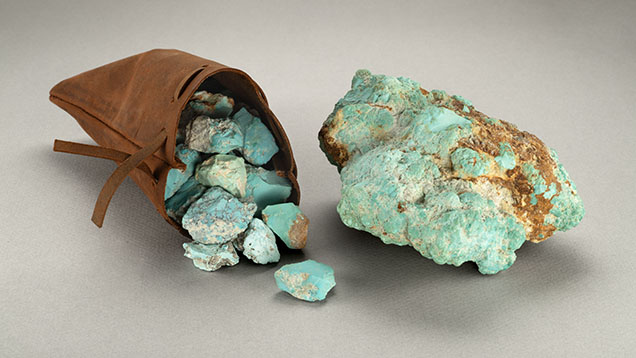
ABSTRACT
A rare 1688 probate inventory documents the extensive gem collection of Gregorio di Girach-Mirman (1612–1688), a prominent Armenian merchant active in Venice and Livorno, Italy. Originally written in Armenian and later translated into Italian, this archival record lists more than 100,000 gemstones, including diamonds, sapphires, emeralds, and pearls, as well as more than 1,700 kilograms of rough amber, garnet, lapis lazuli, and turquoise. Housed in the State Archives of Venice, the inventory offers a uniquely detailed window into the early modern luxury trade and highlights the global commercial reach of Armenian merchant families like the Girach-Mirmans. Drawing on this previously unstudied source, along with a broader set of archival documents from across Europe and Armenia, the present article reconstructs the world of seventeenth-century gem dealing and collecting. It argues that Armenian merchants were central figures in the global trade of luxury goods, operating alongside and sometimes in competition with better-known European contemporaries. The provenance and diversity of Gregorio’s gem holdings, likely sourced from as far as modern-day Colombia, Sri Lanka, Iran, and Myanmar, attest to the geographic reach of Armenian trading networks and the sophistication of their market knowledge. By placing this inventory in its global and material context, the article contributes to ongoing discussions around early modern economic history, material culture, and global commodity flows across Eurasia and the New World. It demonstrates that gem inventories, often overlooked as solely bureaucratic and estate documents, can illuminate the complexity of merchant strategies, the transcontinental mobility of luxury goods, and the dynamics of status and prestige in the early modern period. Finally, one of the central aims of this article is to illuminate the inner workings of gem dealing in this period, including practices of sourcing and collecting, through a rare body of obscure commercial correspondence. These materials offer an exceptional view into a dimension of the trade that remains largely inaccessible and nearly absent from existing historiography.
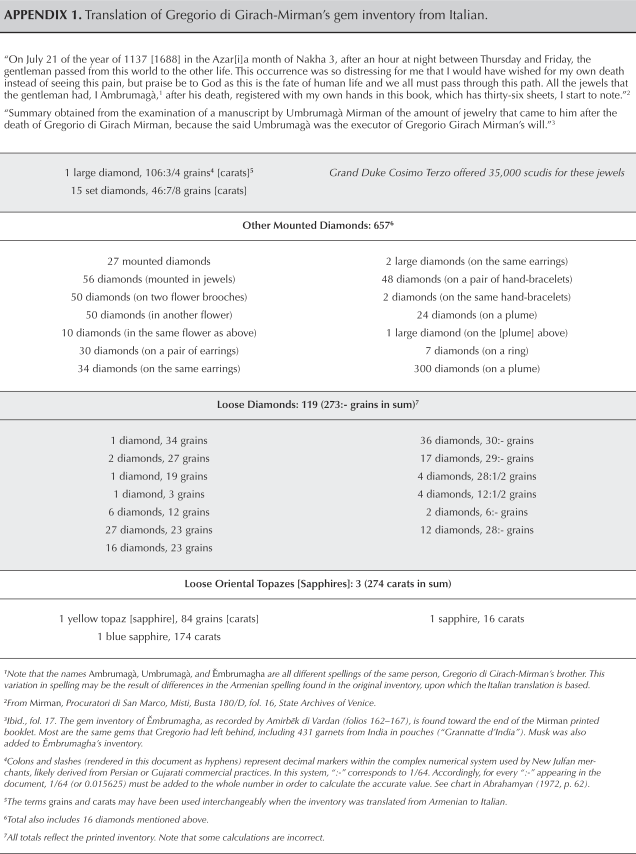
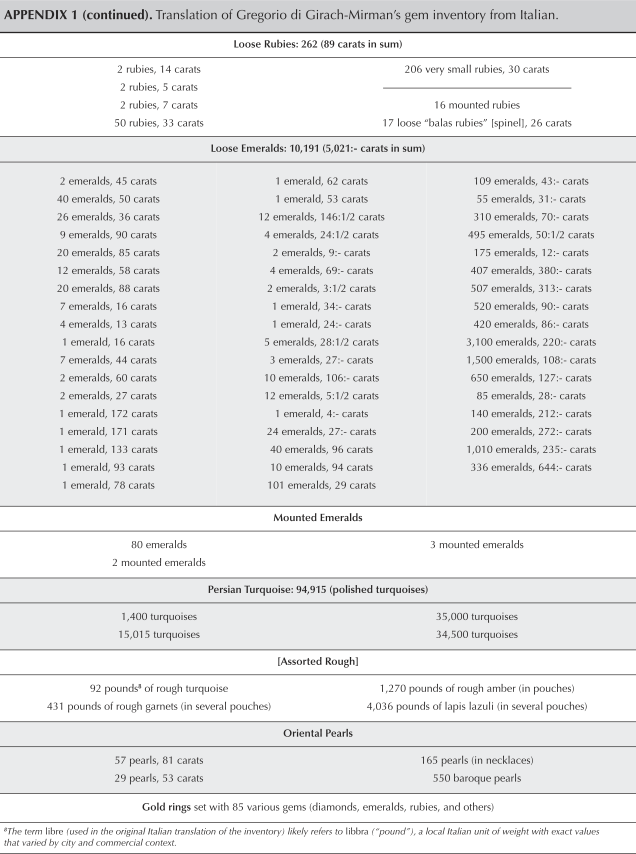
Translated from an Armenian document dated July 21, 1688, a seventeenth-century gem merchant’s inventory has recently come to light after languishing in a European archive for more than 300 years.1 The Italian translation of the original probate document, which is unaccounted for, lists the gem collection of Gregorio di Girach-Mirman at the time of his death in 1688. (See appendix 1 at the end of the article for the English translation of the inventory.) Most notable are his emerald holdings: more than 10,000 loose stones totaling 5,021 carats, the largest of which weighed 172 carats, as well as 85 faceted emeralds with undocumented weights. According to the inventory, Gregorio also owned 89 carats2 of loose and faceted rubies; 17 “balas rubies” (a misnomer for red spinel)3 weighing a total of 26 carats; an 84 carat “oriental topaz”4 (a misnomer for yellow sapphire); a blue sapphire weighing 174 carats, as well as another 16 carat sapphire; 94,915 pieces of cut turquoise and 92 pounds5 of rough turquoise; 431 pounds of rough garnet; 4,036 pounds of lapis lazuli; 801 pearls; and several bags of rough amber. Beyond the value, variety, quantity, and quality of gems, the significance of this collection becomes more apparent when considering the historical and economic contexts in which he conducted the global trade of gems and other luxury goods more than 300 years ago (figure 1).
With the expansion of mining, European exploration, and the movement of people across continents, luxury commodities such as gems began circulating more widely in the early seventeenth century. As South Asian gems appeared with greater frequency in European collections and inventories, their stated or inferred provenance was also deemed important because of the perceived rarity of gems from particular regions. Given this, one might expect historians, gemologists, and other scholars to have abundant evidence of gem collecting, but primary source material on the movement of precious gems remains rare. This scarcity can be attributed to widespread smuggling6 during the early modern period (approximately 1500–1800) and the fact that traders often kept their dealings concealed for safety.
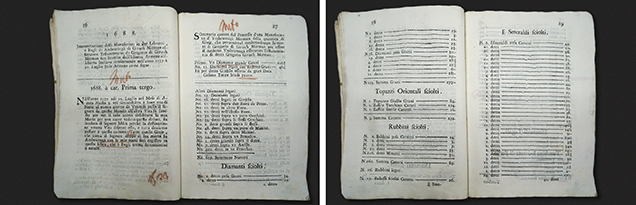
This inventory is only one of the many documents included in the undated booklet (figure 2), which was translated and printed in Italian sometime during the eighteenth century and housed at the State Archives of Venice. Consisting of 187 pages, the booklet includes various family-related business and legal documents, Gregorio di Girach-Mirman’s will written in 1687, and correspondence between Gregorio and his brothers, Ěmbrumagha and Zaccaria. The booklet was likely produced, according to historian Sebouh Aslanian, “for the benefit of assimilated family members [of the deceased] who had lost touch with their roots and could no longer understand the language used by their ancestors only a generation or two before.”7
1Sebouh Aslanian provided the author with digital images of this booklet, which he photographed in Venice (see figure 2). The booklet is entitled Mirman and kept at Procuratori di San Marco, Misti, Busta 180/D, State Archives of Venice. For the purpose of this article, the booklet will be called Mirman from here on.
2It should not be assumed that carat weights recorded in the probate document would be equivalent to the current metric carat value, which was not adopted until 1907. Before then, each country had its own definition of a carat (Kunz, 1913; Zhengzhang, 1991). During the early modern period, the carat was far from a standardized unit, varying considerably from Asia to Europe and elsewhere. See Manutchehr-Danai (2019).
3Named after the Balascia region (now Badakhshan) of northern Afghanistan (Schumann, 2009; Manutchehr-Danai, 2019; De Carvalho, 2024).
4For more on “oriental topaz,” see Shipley et al. (1945) and Manutchehr-Danai (2019).
5Weights are approximate as the historical Italian pound (libbra) varied from 0.301 to 0.339 kilograms depending on region and trade (Zupko, 1981).
6Smuggling, at least in the early modern period, was not considered a crime. In fact, within the circles of private gem merchants, smuggling was encouraged to maximize profit and minimize protection costs. See Gottmann (2016, pp. 51–102).
7The inventory was translated into Italian from the New Julfan mercantile dialect of Armenian, the primary language used in the correspondence of the trade network. See Aslanian (2022, p. 93).
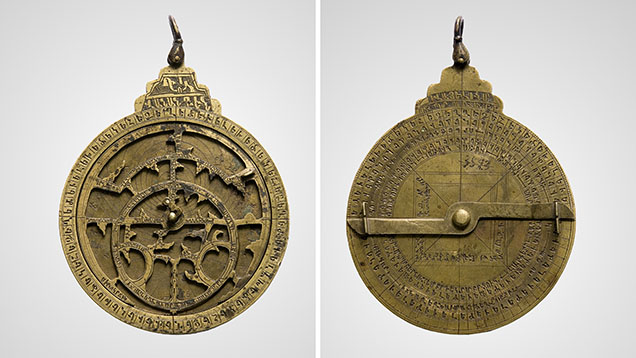
History of Material Culture Through Inventories. Over the past century, the emergence of material history has highlighted how objects and artifacts can provide unique insights into the everyday lives and practices of people in the past. Studies on the material culture of early modern Europe have relied heavily on the analysis of probate inventories preserved in archives across Europe and elsewhere.8 In recent decades, historians and other scholars have used such inventories to trace the details of the economic and social aspects of early modern people.9 Their material lives and belongings provide historians with a unique opportunity to move beyond strictly textual sources. In fact, material “things” have been described by global historians as more mobile than people themselves (Riello, 2022, p. 195) and are therefore deemed extremely useful in studying the circulation of commodities, trade, and travel (figure 3).
Probate inventories in Europe were usually drawn up after a person’s death for legal and administrative purposes, either by notaries or in some cases their next of kin (Riello, 2013, p. 130). These documents listed the possessions of the deceased, with descriptions and occasionally the monetary value of the items. Whether drawn up because of death, legal matters, relocation, or any other major life event, these inventories offer a wealth of information about the owners, their social practices, commercial and cultural activities, fashion, style preferences, and, most importantly, the consumption patterns of a particular time and place.
European archives are inundated with inventories of household items, books, furniture, works of art, weapons, and other items people considered valuable. Jewelry and art historians have also made extensive use of medieval and early modern inventories of crown jewels from different courts to draw inferences about elite tastes and the evolution of jewelry art.10 Many inventories contain mixed categories of belongings, including gems and jewelry. One such example is the inventory of gems belonging to the wife of Emmanuel Ximenez (1564–1632), a Portuguese merchant-banker residing in Antwerp. The Ximenez family traded popular commodities of the time from the New World, South Asia, Europe, and West Africa. Precious gems, including pearls, were also part of their portfolio. In 1617, an inventory of the marital property of Emmanuel and his wife, Isabel da Vega, was drawn up upon her death. The inventory included loose and mounted gems and jewelry (mostly hat ornaments) containing diamonds, pearls, and rubies.11 Another example comes from seventeenth-century Dutch silversmith Jan Herck (1593–1660), with an inventory recorded after the death of his wife. Along with paintings, tapestries, and statuettes, they owned more than a thousand diamonds and some 1,500 pearls (Rijks, 2019).
It is extremely rare, however, to find a specialized inventory such as that of Gregorio di Girach-Mirman. Gregorio’s gem inventory includes items that are seldom documented in standard probate records, offering a glimpse into the inner world of gem dealers or collectors from the past in order to understand “the intentions of the owners of the goods described” (Riello, 2013, p. 126). Gem inventories, if found and analyzed at a large scale, are valuable sources for gem and jewelry historians in identifying consumption habits.
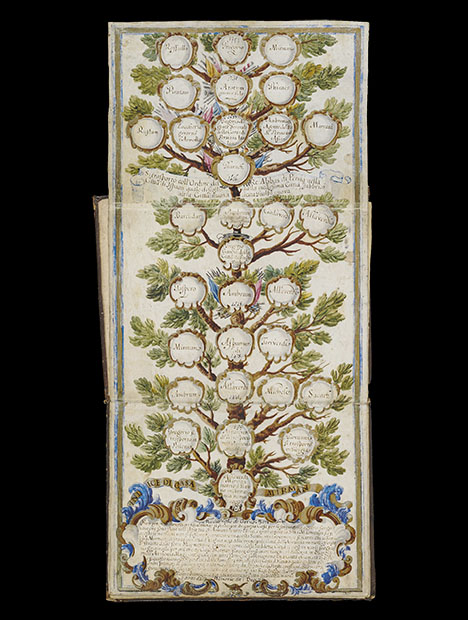
In the discussion of luxury commodities, it is important to avoid generalizations. While luxury was “central to the global history of consumption” (Berg, 2004, p. 93), access to buying, selling, wearing, or otherwise dealing with luxury commodities in the early modern period was limited to a very small group—mainly elites and royalty. Another shortcoming of highly curated inventories lies in the context in which they were created. They can reveal preferences, lifestyles, and taste, translating “material things into linguistic statements” (Keating and Markey, 2011, p. 209). However, their potential worth is much greater when considered alongside other archival documents to provide a broader picture. In the case of Gregorio di Girach-Mirman’s gem inventory, fortunately, accompanying sources such as legal documents, a book of nobility containing the Girach-Mirman family tree (figure 4), accounting ledgers, and business correspondence complement and contextualize the story of this important early modern gem merchant.
8Scholarly literature on early modern European consumption and material history, as well as probate inventories and their utility for historians and others, is extensive. For a few examples, see Wills (1993), Burke (1993), Findlen (2013), and Riello (2013).
9Due to only very recent contributions to research on the history of the Armenian gem trade, documents such as Gregorio’s inventory have not been examined from a gemological angle. As comparison, see the inventory from 1707 of gems and jewelry that belonged to the famed Sceriman family of Armenian merchants, kept at the State Archives of Padua (Archivio Sceriman, b.27, jase. M, pp. 15–20) and also published as an appendix in the exhibition catalog Gli Armeni in Italia (1990–1991), edited by Boghos Levon Zekiyan, pp. 245–247. For more on the Sceriman family, see Bonardi (1990, 1996).
10The literature on European crown jewels is too vast to comprehensively cite. A few key publications include Angelucci (1861), Bapst (1889), Twining (1960), Meen and Tushingham (1969), Prince Michael of Greece (1983), Blair (1998), and Keay (2011).
11See the translation of Ximenez’s 1617 inventory at https://ximenez.unibe.ch/inventory/reading/. For a discussion of the jewelry, see Siebenhüner et al. (2014).
GREGORIO DI GIRACH-MIRMAN’S LIFE AND THE FAMILY NETWORK
According to the inscriptions on his tombstone,12 Gregorio di Girach-Mirman was born in 1612 and passed away in 1688. He was born in the Armenian quarter of Isfahan, the capital of the Safavid Empire, to one of the most prominent Armenian trading families in New Julfa.13
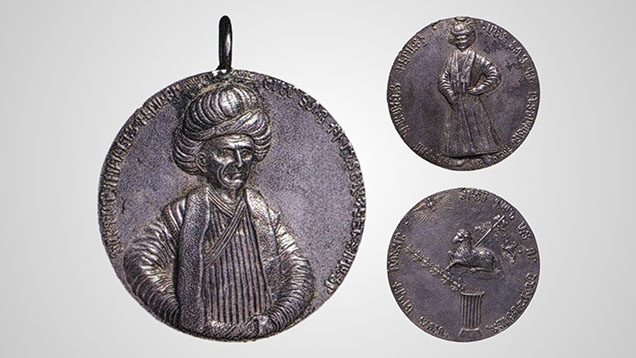
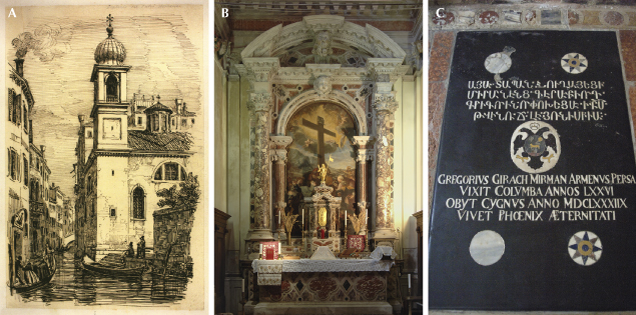
Gregorio spent his adult life in Venice and Livorno and owned multiple properties in prime locations throughout Italy. His four-story apartment in Venice was located near the church of San Basso and a minute’s walk from Saint Mark’s Basilica. He also owned two houses in Livorno and an estate in Tuscany given to him by the Grand Duke of Tuscany, Cosimo III de’ Medici (figure 5).14 Gregorio started the Italian branch of the Mirman family and had likely settled in Venice by 1664. He served as an envoy of the Safavid Shah Suleiman in Italy, and the title “Agente Generale della Corte di Persia in Italia” appears beneath his name on the family tree (Seth, 1939, pp. 259–261). He also founded the Santa Croce Catholic Armenian Church in Venice (figure 6), which opened its doors in 1688 and remains in use today. His gem dealings likely earned him status in Italy, especially with the ruling Medici family in Florence. Gregorio died in 1688 after being ill for six months and was buried in Santa Croce.
The more than 100,000 gems and nearly 2,000 kilograms of rough Gregorio left behind might seem extraordinary at first. After all, only royalty or the most powerful elites could amass such wealth during this period. Yet Gregorio was one of dozens of Armenian merchants of his era who crisscrossed continents, carrying luxury commodities, particularly gems, as a central part of their caravans and maritime cargo. To understand Gregorio’s trade network, it is necessary to first consider the pivotal role Armenian merchants played in the global gem trade of the early modern period.
The Girach-Mirman family was one of the most prominent New Julfan gem trading firms of noble ancestry in the late seventeenth and early eighteenth centuries. Based in both Italy and Safavid Iran, the Girach-Mirmans and their agents operated on the global gem trade routes between the three “gunpowder empires”15 of the early modern world—the Safavids, the Ottomans, and the Mughals—and the consumer markets of the Mediterranean, Russia, and northern Europe. The firm’s commercial reach extended from the 1650s until the early 1700s. As one historiographer of New Julfa wrote of a Mirman family member, his “arms of commerce stretched to Europe, Astrakhan and Gilan” (Hovhaneant‘s, 1880, p. 139). Gregorio di Girach-Mirman, as mentioned earlier, was envoy of the Safavid Iranian court to Italy, a fact recorded in the Girach-Mirman family tree (again, see figure 4) and confirmed by an official certificate preserved in the family’s book of nobility.16 Gregorio’s brother Ěmbrumagha, the executor of the will containing the gem inventory, was the King of Iran’s agent in Asia.
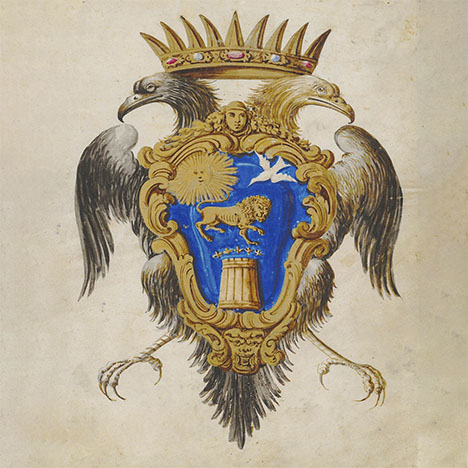
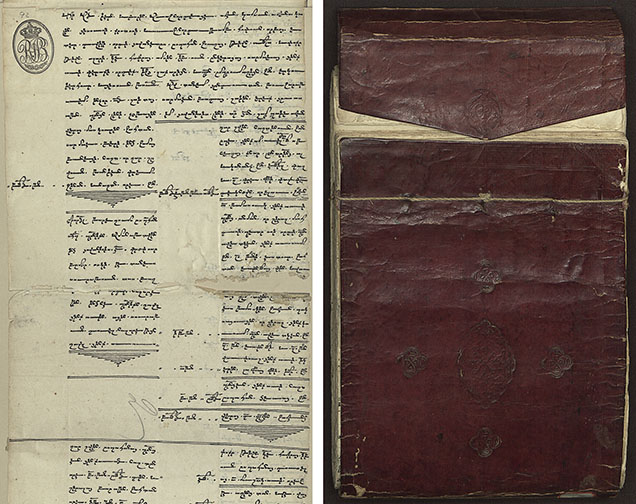
The Girach-Mirman coat of arms, also contained in the book of nobility, portrays a crown atop a double-headed eagle (figure 7). The crown is set with diamonds and rubies, a symbol of their deep involvement in the gem trade. In the middle is a beehive with a swarm of bees overhead, probably symbolizing the family’s extensive trade network. Crossing long distances to sell gems and other early modern commodities, these “bees” put the family’s capital to work, returning high profits to the “honeypot” of the extended family. One of the most useful sources on the commercial activities of the Girach-Mirman family is the accounting ledger of one such agent, Hovhannes Ter-Davt‘ian17 (figure 8). Ter-Davt‘ian started recording his journal in 1682 when he left New Julfa for Surat in India aboard the Armenian vessel Slemani, sailing from the Persian Gulf port of Bandar Abbas. Ter-Davt‘ian was given an initial capital of 250 tumans18 in commodities, including red and green English broadcloth and cash worth 2 tumans and 8500 dians (currencies used in the Safavid Empire), given to him by his masters, Gregorio’s brothers Zaccaria and Ěmbrumagha. The profits were to be divided by a ratio of three to one: three parts to the Girach-Mirman family, and one part to Ter-Davt‘ian.
While traveling to Asia, a region known for its diamonds and colored stones during this time, Ter-Davt‘ian carried with him coral and amber from the Mediterranean and northern Europe. These two gems were particularly sought after in the Indian subcontinent. Throughout his journey, Ter-Davt‘ian appeared to constantly trade in gems, acquiring new stones and selling those he had brought along. Between 1682 and 1693, he bought amber and about 32 kilograms of coral, intending to sell them in Tibet and other major Asian centers. The amber, likely originating from the Baltic Sea, was sold to the Armenian and other local merchants in Tibet in exchange for musk (Khachikyan and Papazyan, 1984, p. 32). Ter-Davt‘ian spent five years in the Tibetan city of Lhasa before returning to India in 1691. Reaching Patna in northeast India in 1692, he bought precious stones, including emeralds, and did business with local merchants, who probably helped him in selling emeralds, even transporting some all the way to Nepal (Khachikyan and Papazyan, 1984, p. 33). During the course of his travels, which ended in Hooghly (or Chinsurah) in West Bengal (where his accounting ledger entries end), Ter-Davt‘ian traded amber, coral, lapis lazuli, emerald, spinel, pearl, and other commodities. His accounting ledger offers valuable insight into his multilayered gem dealing practices. Whether Ter-Davt‘ian acquired most of his gems in Asia or received some from Gregorio’s commenda agents in Europe remains unclear, as little research has been done on this aspect of his trade.
12The translation of his tombstone inscription in Armenian reads as follows: “This is the tomb of Grigor, son of Girach of the Julfa-born Mirman family, who passed away in Christ in the year 1137 [1688], on June 21.” The Latin text translates to “Gregorious Girach Mirman, an Armenian of Persia, lived seventy-six years as a dove; he died as a swan in 1688; he shall live as a phoenix for eternity.” (See figure 6C.)
13For Gregorio’s detailed biography and more specifically his fluid religious identity, see Aslanian (2022).
14For details of properties mentioned in Gregorio’s will, see Aslanian (2022).
15The three “gunpowder empires” during this time were the Ottoman, Safavid, and Mughal empires. The term was coined by historians Marshall G.S. Hodgson and William H. McNeill to emphasize the use of cannons and firearms in the expansion of these three empires from roughly the mid-sixteenth to early eighteenth centuries. See Hodgson (1974).
16Manuscript 372, folios 5v–6v, Mesrop Mashtots Institute of Ancient Manuscripts in Yerevan, Armenia. The author worked at this museum in the summer of 2017 and was able to acquire the digital copy of this family book that includes the coat of arms of the Girach-Mirmans, as well as their family tree and history. The book was also cited in Aslanian (2022).
17This ledger was introduced to the scholarly community when Levon Khachikyan wrote a short article about its discovery in Lisbon. See Khachikyan (1966).
18Iranian currency.
THE NEW JULFAN TRADE NETWORK AND THE GLOBAL TRADE IN GEMS AND OTHER LUXURY GOODS
The role of Armenian merchants in the long-distance trade of gems between the Mediterranean and the Indian Ocean during the seventeenth and eighteenth centuries is a new area of scholarly inquiry, despite the abundance of primary source material across different European archives. While research into the New Julfan Armenian mercantile network and its activities in early modern global commodity trade in general has been on the rise (Raveux, 2007, 2008, 2015), scholarly literature on their engagement in the global gem trade is almost nonexistent. Most studies have focused on the role of Europe’s East India companies, as well as the Sephardic and Ashkenazi Jewish networks, as the main long-distance players in the trade of South Asian and Brazilian diamonds as well as other gems in the Mediterranean markets of Europe.19
Small-scale enterprises of the early modern period, such as Armenian and Asian family firms and private merchants, conducted their trade against the backdrop of the first large European joint-stock corporations: the English, Dutch, Portuguese, and other East India companies. Unlike these state-chartered, vastly financed, and well-armed corporations, private gem merchants were vulnerable to abuses of power by customs officials, governments, and criminals over the long distances they crossed to conduct business.20 Because of their small scale and the scarcity of archival sources on early modern Asian merchants and family firms—especially compared with the systematically archived correspondence of the East India companies—these merchants went largely overlooked by historians until recently.
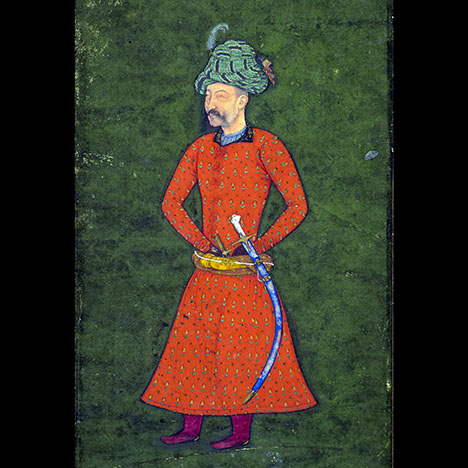
Most of the Armenian gem merchants lived in New Julfa, a community in Isfahan, the capital of the Safavid Empire since the early seventeenth century. The New Julfan mercantile network emerged after the forced migration of predominantly Armenian silk merchants from Old Julfa, a town on the banks of the Arax River near the Caspian Sea, in 1604–1605 (figure 9). They were relocated approximately 1,000 kilometers away to Isfahan, the newly established capital of Safavid Iran. These deportations were part of Shah Abbas’s larger “scorched-earth” policy during the Ottoman-Safavid wars of the seventeenth century, with the aim of regaining the lands that had been lost to the Ottomans at the end of the sixteenth century during the ongoing wars between two empires.
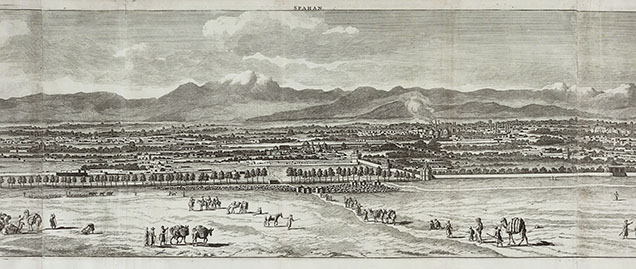
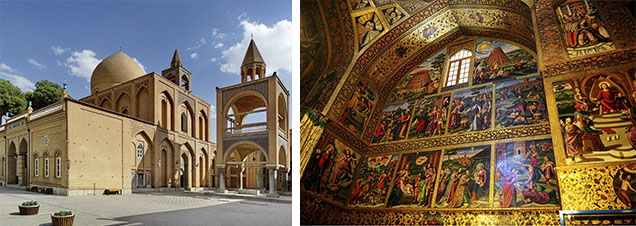
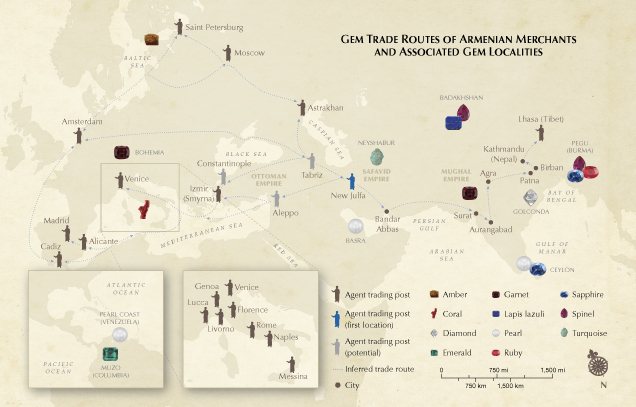
After resettling in Isfahan, the Armenians founded their own community in 1606 and named it New Julfa. As these merchants became more affluent, they commissioned and built churches in Isfahan and beyond (figure 10). The most prominent of these was All Savior’s Monastery (figure 11), constructed between 1606 and 1664. Commonly known as Vank Cathedral, it stands today as a powerful symbol of the New Julfans’ collective prosperity and their devotion to the Armenian Church. For centuries, it has served as a testament to Armenian faith and community within Iran (Landau and van Lint, 2015). As skilled silk merchants, the Julfans were deemed instrumental by the Shah for expanding the Iranian raw silk trade into the Mediterranean and beyond. Drawing on their previous involvement in overland and maritime trade, the Armenian mercantile community of New Julfa established an extensive trade network that stretched east to Mughal India and Tibet; west to the Mediterranean and the European cities of Amsterdam, London, and Cadiz; and north to the Russian Empire (figure 12). This network was maintained for roughly a century and a half.
These merchants and their family firms are vital to understanding the early modern global gem trade. Their business documents, written in a nearly extinct Armenian dialect, provide a unique glimpse into the largely hidden world of long-distance Asian merchants and family-owned trading companies. These global players had a much more important role in the oceanic and caravan worlds of South Asia and Europe than historians previously recognized, largely due to the scarcity of primary source material that could be accessed and interpreted.
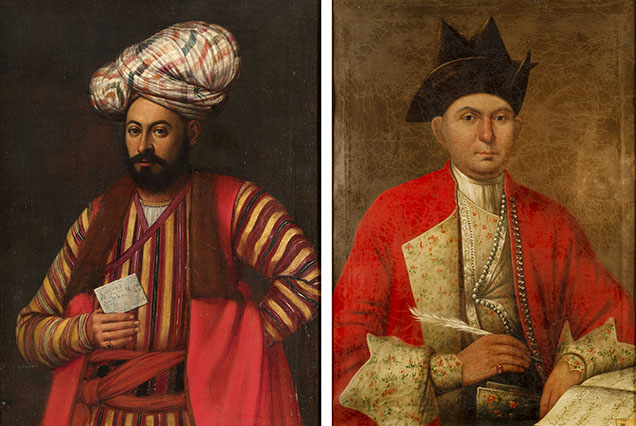
Even in very recent scholarship on the economic history of New Julfa, gems are scarcely mentioned as important commodities for this merchant network (figure 13). Historians have long considered the New Julfans as chiefly silk merchants. Shortly after settling in their new hometown, they won exclusive rights to export Iranian raw silk to Europe in 1619.21 However, recent studies demonstrate that Iranian raw silk and South Asian textiles were not their only trading commodities. Some Julfan families were involved exclusively in luxury goods such as gems. The three leading merchant families in New Julfa—the Minasians, the Scerimans, and the Girach-Mirmans—were all significantly involved in the long-distance trade of gems (see Tajiryan, 2020).
19For a few key works on the involvement of Jewish networks both independently and in the context of early modern East India companies in Europe, see Yogev (1978), Mentz (2005), Trivellato (2009), and Vanneste (2011).
20For a comparison of small Asian long-distance merchants and the European East India companies, see Aslanian (2015).
21In a public auction organized by Shah Abbas, New Julfan merchants united to outbid the English East India Company for monopoly export rights on Iranian silk until the second half of the seventeenth century and beyond. See Herzig (1991), Matthee (1999), and Aslanian (2011).
Safeguarding the Transcontinental Flow of Gems. How did merchants such as Gregorio conduct their day-to-day business over these long distances, and what tools did they have at their disposal to safeguard their transactions? The two main factors in their success were a robust family organization and the use of “paper instruments”22 such as business, partnership, and legal contracts, as well as letters of recommendation and powers of attorney. As a trade network, the New Julfans operated through family firms. Merchants established these firms and hired traveling commenda agents who put the firm’s capital to work, crossing thousands of miles along caravan and maritime routes of South and Southeast Asia, the Russian Empire, and Europe. These family firms were the cornerstones of the New Julfan community. Thanks to this system, Armenian merchants in New Julfa maintained their mercantile network for more than 150 years, up until the 1750s. Alongside the first joint-stock corporations of the time, as well as the Sephardic and Ashkenazi Jewish mercantile networks, the New Julfans became important players in the global gem trade of the seventeenth and eighteenth centuries, even though only a small number of families were involved.
Gregorio and his brothers Ěmbrumagha and Zaccaria established the Girach-Mirman family firm (called sark’ar, Persian for “firm” in the New Julfan dialect) in 1656, when they pooled their funds in New Julfa. Gregorio was the executive manager of the firm, which survived for almost forty years, operating mainly from Italy, Spain, and Asia (Aslanian, 2022, p. 91). Together, the brothers employed at least 22 commenda agents23 who traveled as widely as Tibet and Nepal, as well as to Alicante in Spain and the Italian cities of Livorno, Venice, Naples, and Florence, which were main nodes in their network. The Girach-Mirman agents and their extended network of correspondents traded in diamonds, colored stones, pearls, and amber, as well as mirrors, Venetian glass, wheat, and other popular commodities. Based on Gregorio’s inventory, it appears the Girach-Mirmans built their wealth primarily through dealing in precious gems, some of which they had brought with them from Iran to Italy in the 1650s.
22This is Aslanian’s term to describe the different legal documents used by New Julfans to organize and conduct their trade. See the chapter titled “Paper Instruments” in Aslanian (2023).
23The number of agents is recorded in the Mirman booklet on folios 21–22.
Commenda Contracts and Agents. Wealthy merchants like Gregorio often employed commenda agents who traveled on their behalf. The growth and success of the New Julfan mercantile network depended on this partnership contract. The commenda was a bilateral contract, typically between a merchant who had ready capital or merchandise and an agent with commercial skills and a trusted reputation (Aslanian, 2007). These agents were usually selected by the wealthy partner, or khwāja, of a family firm and chosen from a pool of skilled young merchants at the beginning of their careers. It was the combination of commenda agents, the capital provided by wealthy merchants, and—more importantly—the circulation of vital commercial information through timely and systematic correspondence that made the trade in gems possible.
Commenda agents facilitated the circulation of gems and other commodities through their language skills and business knowledge. They carried expensive diamonds, colored stones, and pearls along maritime and caravan trade routes and across European borders. The commenda partnership was at the heart of New Julfan extended households or family firms. At least four commenda agents for the Girach-Mirman family operated in Europe. Herapet di Martin24 played a pivotal role in the firm’s gem trading activities in Venice, which was arguably the most significant part of the Girach-Mirman family’s diverse portfolio, along with the Venetian mirror glass that was shipped to Alicante and Madrid (Aslanian, 2022, pp. 92–93).
The other three agents in Europe mentioned in the Mirman booklet are Paulo di Tadeo, Sanasar, and Amirbēk di Vardan. The latter also served as executor of the will for Gregorio’s brother Ěmbrumagha. Vardan’s correspondence, comprising about a hundred documents exchanged with Herapet di Martin, is preserved in the Avogaria di Comun archives.25 A larger body of business letters between Martin and Vardan, together with correspondence from several other Girach-Mirman commenda agents, is housed in two dossiers under the Documenti Armeni Mercantili collection at the State Archives of Venice.
One of the dossiers (Busta 2) contains more than 50 letters from Vardan and fellow agents such as Martiros di Sarkis, who was based in Livorno. These letters were dispatched from Florence, Naples, and Livorno to Martin in Venice between 1680 and 1706, reflecting the wide geographic spread of the Girach-Mirman commercial network across Italy’s main port cities and trade hubs. The most substantial portion of the correspondence, which documents the family’s gem-trading activities, is preserved in Busta 3. This dossier contains copies of hundreds of letters sent to and received by Martin, dating from the 1680s but concentrated mainly in the late 1690s and early 1700s, underscoring the central role of Venice as the European node in the Girach-Mirman trading system. A much smaller archive of 17 letters belonging to Martin is kept in London at the British Library.26 Even a preliminary look at these documents reveals a wealth of information about large gem shipments to Venice from different Italian cities, as well as from the Ottoman Turkish port of Izmir, a probable transit point for Asian gems from Iran and India.
24This transcription of the name is based on the spelling used by Herapet di Martin himself in a bill of exchange, written in Venice on March 20, 1702.
25The Avogaria was the office of public prosecutors in the Republic of Venice responsible for safeguarding the rights of the city’s noble families.
26Oriental MS 15794, British Library.
FROM MINE TO MARKET: GEM PROVENANCE IN GREGORIO’S INVENTORY
The gem inventory of Gregorio di Girach-Mirman, compiled after his death in 1688 and recorded by his younger brother Ěmbrumagha as the executor of Gregorio’s will,27 is a testament to the family’s deep involvement in the global gem trade. The Girach-Mirman family likely engaged in the trade even before their move to Italy. According to Mesrop Ughurlian, who chronicled the Armenian presence in Livorno, the Girach-Mirman family brought precious stones with them from Iran (Ughurlian, 1891).
The inventory does not specify the geographic origins of the gems, except for the turquoise stones, which are explicitly identified as Persian. Although the provenance of Gregorio’s other gems is not recorded or may have been omitted during the translation of the inventory into Italian, it is still possible to infer their likely places of origin based on contemporary gemological knowledge and patterns of global trade, as will be discussed later. Determining the origin of these gems is complicated by several factors: the lack of documented information in historical records, the possibility that relevant details remain unavailable or unrecognized, and the potential confusion arising from the terminology used by early modern gem dealers.
The inventory in discussion and its portfolio of gems listed reflect only the world of a single merchant. Whether Gregorio assembled these gems for personal use or for sale (or both) remains unclear, although colored stones notably outnumber diamonds and pearls. This imbalance may have reflected either personal preference or broader market conditions at the time; a single inventory cannot resolve this question. For major gem dealers such as Gregorio, however, the possession of an exceptional collection likely functioned as a marker of social status and prestige, a pattern that remains evident among modern dealers.
27Drafted in January 1687, less than a year before his passing, through a public notary in Venice. See Aslanian (2022, p. 93).
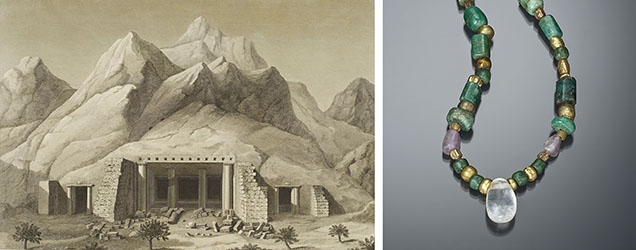
Emeralds. The gems most prominently featured in Gregorio’s portfolio were emeralds. Historically, the best-known emerald deposits since Ptolemaic and Roman times were in Egypt, mainly in the Gebel Zabara and Wadi Sikait regions (figure 14) of the eastern Egyptian desert between the Nile River and the Red Sea (Cailliaud, 1822; Floyer, 1892; Schneider and Arzruni, 1892; Harrell, 2004; Schmetzer, 2021, p. 338). While Egypt supplied the bulk of the world’s emeralds until the late sixteenth century, these stones were small and of lower quality (judging from examples that have been preserved in collections or treasuries).
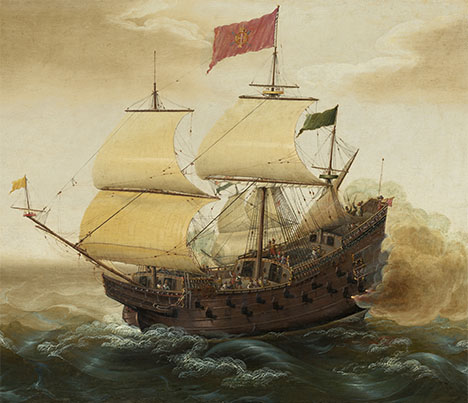
Gregorio’s emeralds were probably from Colombia, the main source of higher-quality emeralds during this time. These began arriving in European markets, particularly Seville, by the beginning of the sixteenth century (Pogue, 1916, 1917).28 Following the Spanish arrival in the Americas in 1492, the Colombian emerald trade soon expanded. Emeralds were shipped west across the Pacific aboard the famous “Manila galleons” (figure 15), departing from Acapulco to Manila (Schurz, 1939) and then onward to Goa before ultimately reaching Europe. Another well-established route ran from Cartagena to Seville, with stops in Havana or the Azores. It is possible that the Girach-Mirmans bought their Colombian emeralds through both routes.
Because gem shipments were often secretive or involved smuggling, tracking their volume can be exceedingly difficult, if not impossible, for modern historians. Nevertheless, historians and geologists have access to sporadic evidence suggesting that the circulation of Colombian emeralds was extensive. For example, oxygen isotope ratio analysis conducted by one group of mineralogists indicated that in the beginning of the seventeenth century, emeralds from the Muzo mines in Colombia were being transported to both Europe and Asia on a significant scale. In the study, an analysis of four emeralds from the eighteenth-century treasury of the Nizam of Hyderabad in India determined that three of them originated from the “western emerald zone of Colombia,” and one from Afghanistan’s Panjshir Valley mines (Giuliani et al., 2000). Unfortunately, no reliable historical data supports the study’s claim that Panjshir Valley emeralds were used in Indian jewelry as early as the seventeenth century. These emeralds may have been swapped in at a later time—perhaps the twentieth century, when Afghan emeralds were readily available in global markets.29
Some European merchants, such as the Helleman family in Antwerp, whose trading network spanned the Atlantic, bought emeralds directly from the New World. The Hellemans, mainly through their branch in Seville, had dealt in emeralds since at least 1586 (Anderson, 2019, p. 75). The Hellemans were at the forefront of receiving South American gem shipments flowing into Europe, mostly under the auspices of the Spanish Crown.
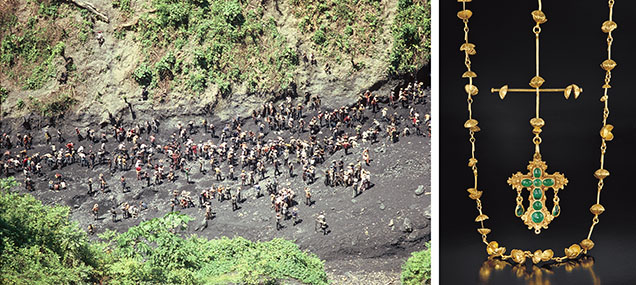
One example that demonstrates the scale of the global circulation of gems during this time is the Spanish treasure galleon Nuestra Señora de Atocha. This ship, capable of transporting 500 tonnes of cargo, left Havana for Spain in September 1622 but sank during a violent storm only a day after embarking. The Atocha was carrying about 32 kilograms of Colombian emeralds and emerald and gold jewelry, along with other commodities, such as gold and 40 tonnes of Bolivian silver. The Atocha shipwreck was discovered near Key West, Florida, in the 1970s, and the emeralds salvaged from it are considered some of the most beautiful to emerge from the Muzo mines (figure 16). In addition to seven rough emeralds, several other objects recovered from the Atocha wreck were analyzed by GIA researchers, including a rosary and crucifix set with nine emeralds, two emerald-set rings, and a gold brooch set with a step-cut emerald, among other items. They were all confirmed to have Colombian origin (Kane et al., 1989). The discoveries from the Atocha offer a dramatic example of the global trade in gems during the early modern period. Never before had luxury commodities traveled such long distances.
Gregorio’s emerald-rich inventory could also reflect simple economics: During the seventeenth and eighteenth centuries, emeralds arguably fetched their highest price in India. Considering that the Girach-Mirman family had extensive business operations there, Gregorio probably sent most of the firm’s emeralds to India, where demand and prices were higher (Lane, 2010, pp. 240–244). As early as the mid-1500s, high-quality Colombian emeralds were inundating the markets of Europe and Asia. Ironically, the inferior Egyptian emeralds commanded much higher prices, probably because Colombian emeralds were oversaturating the market.
Juan de Arfe y Villafañe (1535–1603), the Spanish court jeweler of Philip II, wrote a book in the sixteenth century containing detailed price comparisons for diamonds, rubies, spinel, and more importantly for old and new emeralds. His price lists clearly indicate the price difference between “esmeralda vieja” (old-mine emeralds from Egypt) and “esmeralda nueva” (new emeralds from South America), the latter selling for half the price (Arfe y Villafañe, 1572, pp. 48–49, 51–54). In the first half of the eighteenth century, 150 years later, Armenian gem dealer Aghamal Khwāja Minasian noted that Egyptian emeralds, which he called “old” or Ṣa‘īdī emeralds (Ṣa‘īd in this context also refers to Upper Egypt), sold for higher prices than the “new” ones from Colombia.30 Egyptian emeralds, judging from examples preserved at museums around the world, tended to be of lower quality and more opaque than those from Colombia. Even in the early modern period, gems with fewer flaws and inclusions were preferred. While it is possible that some high-quality, so-called “old-mine” Egyptian emeralds were in circulation during this time, evidence suggests that labeling an emerald as “old-mine” was a marketing strategy to command a higher price. This designation often misrepresented the gems’ true provenance; in reality, many of them came from the New World.
Whether Gregorio’s emeralds were Egyptian, Colombian, or a combination of the two is difficult to determine. Surviving correspondence suggests, however, that Girach-Mirman agents Amirbēk di Vardan and Herapet di Martin bought at least some of the emeralds in the markets of Venice, Naples, Florence, and Livorno, along with pearls, turquoise, and diamonds. In a 1694 letter to Vardan, Martin lamented the shortage of high-quality emeralds in the market:
Let it be known to your highness that in the letter of mercy from June 25th... you had written about Mr. Zak’ar’s [Zaccaria’s] emerald and ordered the purchase of a small, good [quality] emerald. The issue is that there are no middlemen left from whom I have not placed orders, nor merchants whom I have not consulted; there are simply no good [emeralds]. There are clear ones, but they are pale, lack clarity, and are large.31
Throughout the Girach-Mirman agents’ correspondence, finding emeralds of desired size and quality seemed to be a constant challenge.
Recent advances in gemological, chemical, and spectroscopic analyses of both loose and set gemstones housed in museum collections have raised the possibility that emeralds from the Swat Valley in present-day Pakistan were in circulation as far back as the early modern period (Gilg et al., 2025).32 If Swat emeralds were indeed mined prior to 1958, the year of their official discovery (Gübelin, 1982), their presence in early modern gem markets would be plausible, given the region’s integration into long-distance trade routes and the broader circulation of luxury commodities during that era.
It is also possible that some of the Girach-Mirman agents’ emeralds came from the Habachtal region in Austria,33 given the proximity to Italy and the firm’s extensive local network of merchants, middlemen, and gem suppliers there. While there is no documentation of large-scale mining activities in Habachtal in the 1690s, when most of the correspondence between the two Girach-Mirman agents was created, a small number of Austrian emeralds may have reached the European markets.
28For a useful chronology of Colombian emeralds, their mining, and trading, see Sinkankas (1981).
29For a more recent comprehensive study of emerald geology and localities, see Giuliani (2022).
30See Aghamal Khwāja Minasian’s entry on emeralds from the first half of the eighteenth century in his unpublished manuscript, written in Armenian and preserved at the Mesrop Mashtots Institute of Ancient Manuscripts in Yerevan, Armenia, MS 5994, folio 11. See also Lane (2010, pp. 240–244).
31Letter from Amirbēk di Vardan (in Naples) to Herapet di Martin (in Venice), written on July 14, 1694. Letter N174, Documenti Armeni Mercantili collection, Busta 3, State Archives of Venice.
32A recent gemological analysis of the Imperial Crown of the Holy Roman Empire from the early sixteenth century, preserved in the Imperial Treasury in Vienna, suggests that two of the twenty emeralds set in the crown may originate from the Swat Valley in present-day Pakistan. As with any gemological analysis, it is important to note that the identification of a geographic origin does not necessarily imply that a given source was actively exploited at the time the object was created. It is also necessary to consider the possibility that certain gemstones were replaced or reset at a later date, which may account for their attributed origin. Further gemological and historical research is therefore required to arrive at more definitive conclusions.
33For more on the history of emerald mining in Austria, see Schmetzer (2021, 2022).
Jewelry Pieces and Diamonds. Among the items listed in Gregorio’s inventory were numerous jewelry pieces, most notably 85 gold rings set with diamonds, emeralds, rubies, and other gems. Of particular interest is a diamond weighing 106 ¾ carats,34 described as “Un Diamante grande Grani 106 ¾.” This diamond is followed by 15 others, together weighing 46 ⅞ carats. Ěmbrumagha mentions that the Medici duke offered a fortune for those gems: “35000 Scudis35 were offered by the Grand Duke Cosimo Terzo [Cosimo III].”
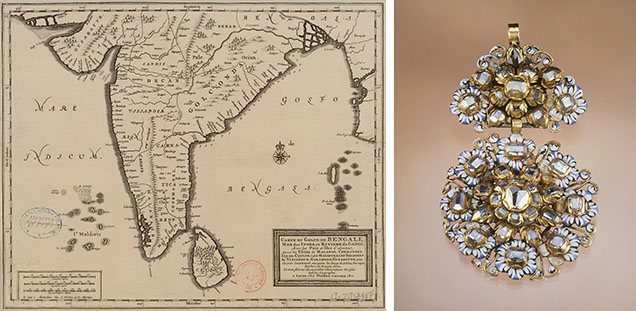
Historical and gemological research has enabled scholars to identify the locations of the main gem deposits in the seventeenth and the eighteenth centuries. In the case of Gregorio’s inventory, it can be said with certainty that his diamonds originated from the mines in the Golconda region of India (figure 17), with a slight possibility that some came from the island of Borneo. Until the early eighteenth century, these were the only two known diamond deposits (Howard, 1677; Heyne, 1814; Voysey, 1825; Ball, 1880, 1881).
Despite substantial offers, the Girach-Mirman family never sold these large diamonds to Cosimo III. It is believed that the Grand Duke of Tuscany even offered one of his “most remarkable” estates in exchange for the largest diamond, but the offer was declined. Gregorio presumably claimed that the diamond served as entertainment for his sons, and he would not part with it for that reason (Pera, 1888, p. 210). Rumors in Livorno suggested that the Girach-Mirman family possessed a large diamond, possibly the 106.75 ct stone listed in the inventory, which was stolen during a nighttime burglary in 1716 from the residence of Petros Mirman and led to his killing (Ughurlian, 1891, pp. 203–204). Authorities searched but never found the diamond. According to a later account, this diamond ended up on the crown of the Imperial House of Austria (Pera, 1888, p. 210), though this claim lacks archival documentation and remains unverified.
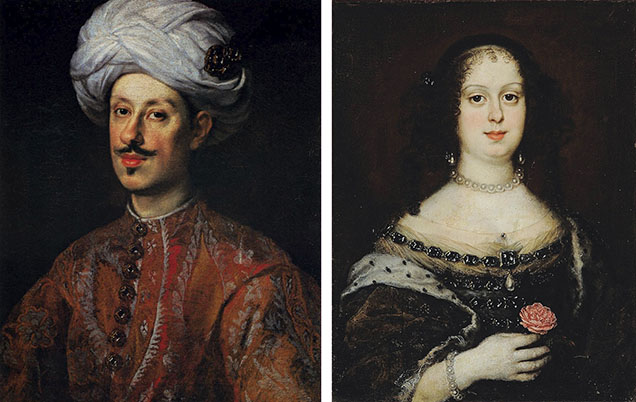
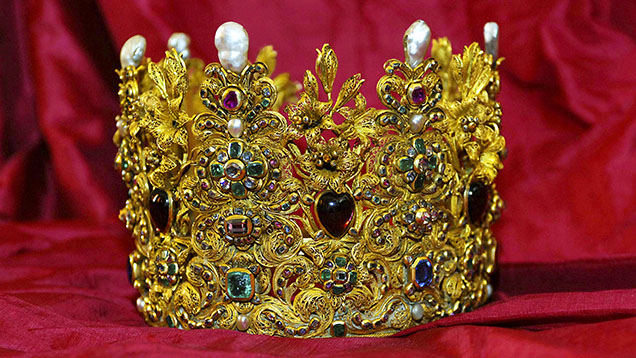
The Girach-Mirman brothers’ standing as gem providers to the Medici court began even earlier. In 1684, Vittoria della Rovere (1622–1694), Grand Duchess of Tuscany and wife of Grand Duke Ferdinando II (figure 18), purchased 20 rough rubies for 285.5 ducats36 from Gregorio. These gems likely decorated the “magnificent gold filigree crown encrusted with over six hundred precious gems: 412 diamonds, 114 rubies, 80 emeralds and surmounted by 5 large baroque pearls, as a gift to the Carmelite nuns” (Modesti, 2020). A close look at the images of the newly resurfaced crown (figure 19) commissioned by the Grand Duchess for Santa Maria Maddalena de’ Pazzi shows more than a hundred rubies.37 No gemological studies or analyses have been conducted on the Carmelite nuns’ crown, and it remains nearly impossible to verify the accuracy of the gemstones listed in the document.
34The list of gems, written in Italian, uses “grain” instead of “carat” when describing this diamond. The author would argue that grani here refers to carats for two reasons. First, grani is used in place of carat multiple times in the document, with some gems listed in grains and the rest in carats. But at the end of each entry, the sum is always presented in carats. Second, it is known that the Girach-Mirman family owned an unusually large diamond, for which one family member was later killed. Converted to carats, a gem of 106 ¾ grains would only equal about 30 carats—an average-sized stone.
35Scudo (plural scudi) was a currency used on the Italian peninsula until the nineteenth century.
36An early European currency.
37For a detailed look at the gems used in creating the crown, see Pacini (2010).
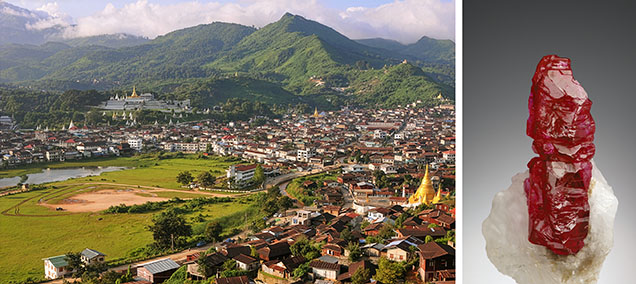
Rubies. Gregorio left relatively few rubies in his collection—just over a hundred—with some set in jewelry but most kept loose. The finest rubies during this time came from Burma (present-day Myanmar).38 The Burmese mines are among the oldest ruby sources. The mines of the Mogok Stone Tract in north-central Burma (figure 20) have been producing for at least 800 years (d’Amato, 1833; Streeter, 1887; Gordon, 1888; Brown and Judd, 1896). The beauty of Burmese rubies was described by European travelers before Gregorio’s time, including Niccolò de’ Conti, Duarte Barbosa, Ludovico di Varthema, and Jean-Baptiste Tavernier. Evidence suggests rubies were being traded by European gem dealers as early as the seventeenth century,39 though much research remains to be conducted on the ruby and sapphire trade across the centuries.
38Aghamal Minasian cites the Burmese mines of “Pegu” as the source of rubies. While the present-day city Bago in Myanmar was known as Pegu in the medieval and early modern periods, Armenians used “Pegu” to describe Burma as a whole, and that is probably what Aghamal meant. There is no record of ruby mining in Pegu itself, but rather in locations such as Sagyin, Mogok, and Naniazeik, some 300–650 kilometers away.
39See Jacques de Coutre’s dealings in ruby and other gems in Lane (2010, pp. 129–130). For a brief description of Burmese and Sri Lankan rubies and their sourcing, as well as other gems in the Middle Ages and onward, see Schmetzer and Gilg (2020).
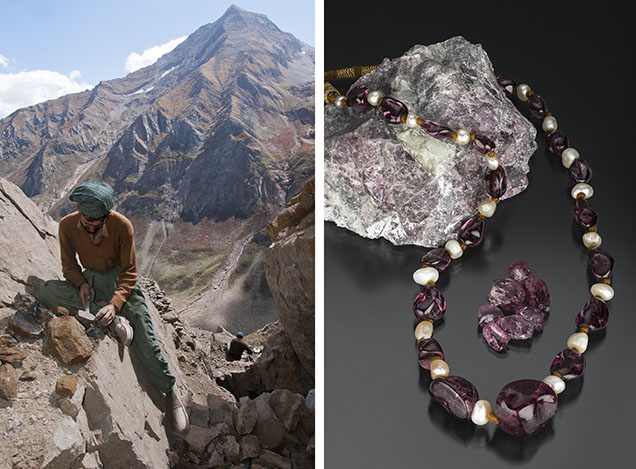
Spinel. Gregorio’s inventory also includes 17 “balas rubies,” which were actually spinel but frequently misidentified as rubies due to their reddish color (figure 21). These certainly would have come from the famed Badakhshan mines in the Safavid Empire, spanning portions of modern-day Afghanistan, Tajikistan, and China (Prinsep and Kalikishen, 1832; Ball, 1894; Pedani, 2002; Content, 2016). Armenian merchants from New Julfa not only differentiated between spinel and rubies (which they called “red sapphires” in Armenian) but also dealt extensively with spinel from Badakhshan in the latter seventeenth century, as shown in a few examples from the business correspondence of Armenian gem dealers like Gregorio. In one of the hundreds of letters written by Minas Minasian, head of the Minasian gem trading family of New Julfa, he noted sending three spinels from Iran or India to his agents in the Ottoman Empire, with the final destination in Livorno. In his letter from July 22, 1691, Minasian reported that three Badakhshan spinels had been dispatched, including a larger, high-quality stone weighing 45 carats and valued at 16 tumans, as well as a pair weighing 55 carats with a sale price of 14 tumans.40 An expert such as Minasian would be able to distinguish between a ruby and a spinel (called la'al),41 which he described as the “red ‘stone’ of Badakhshan.” According to him, the finest spinel was “clear with water, inclusion-free, flawless” and “had the color of an onion.”42 Besides Tajikistan, the island of Ceylon (now Sri Lanka) was another traditional source of red spinel that may have passed through the hands of Armenian merchants (Gorghinian et al., 2013).
40Manuscript 98, Busta 123, Documenti Armeni, Acquisti e Doni, State Archives of Florence.
41The New Julfan mercantile vocabulary was a combination of more than a dozen Eastern and European languages, including the Persian language of the host empire. Identifying gem names such as ruby, spinel, or garnet can be problematic due to the same word (la’al) being used to denote all three red stones. It is very important to look at the context of the source in which the stones are described to accurately translate them. See Melikian-Chirvani (2001, pp. 77–110).
42Aghamal Minasian is probably referring to the purplish red color of red onions, as most spinels come in red, violet, and reddish purple. See Aghamal Khwāja Minasian, MS 5994, folios 11–12, Mesrop Mashtots Institute of Ancient Manuscripts.
Sapphires. It was not until 1801 or 1802 that European mineralogists established ruby and sapphire as the two gem varieties of corundum (e.g., von Kobell, 1864, pp. 526–529). Before that, sapphires of different colors were often labeled as “Oriental” to denote their perceived “superior hardness” (Hughes et al., 2017). Hardness was the characteristic merchants and lapidaries used to differentiate between gems of similar color, such as garnets and rubies.
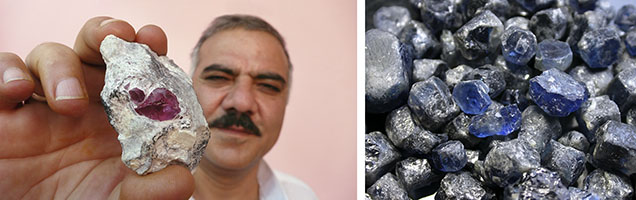
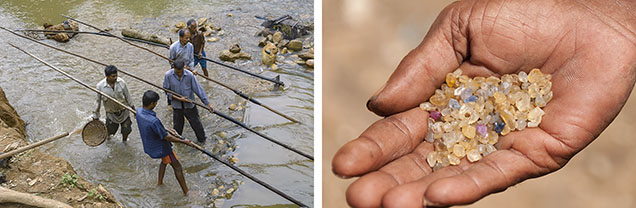
Gregorio owned comparatively few sapphires, which seemed to be chosen for their size. His collection included a yellow sapphire, a common color for corundum, as well as blue sapphires. One of the blue sapphires weighed 174 carats, an impressive size by any standard. The origin of these sapphires is difficult to trace. Corundum mines were far more widely distributed across Eurasia than those for other gems (figure 22). The main sources in the seventeenth century were Burma, Afghanistan (first mentioned in the tenth century), Ceylon, and to a lesser extent, the Chanthaburi mines of modern-day Thailand (Hughes et al., 2017). The Sri Lankan corundum mines (figure 23) are among the oldest sapphire sources and may well have produced Gregorio’s sapphires (Häuy, 1799; Mahroof, 1999; Dharmaratne, 2003).
Pearls. Pearls were also part of Gregorio’s inventory, which describes them as “Oriental.” Oriental pearls, according to G.F. Kunz, were found “in the true pearl-oyster, and have a marine or salt-water origin, being found either in the ocean or one of its adjacent tributaries, and belonging to one of the numerous species of the Margaritiferae” (Kunz, 1908, p. 351). In the early modern period, pearls from both the Persian Gulf43 and the Gulf of Mannar were categorized as “Oriental” to denote their very high quality. Most round natural pearls circulating in the Eurasian markets at the time would have come from the Pinctada radiata mollusks found in the Persian Gulf (Strack, 2006, p. 135), as well as the Gulf of Mannar fisheries, especially Thoothukudi (formerly Tuticorin) off the southern coast of India. Tuticorin was an abundant source of high-quality natural pearls. Yet compared with the “Basra” pearls from the famous fisheries of the Persian Gulf, Gulf of Mannar pearls have received little attention in the historical context of the global gem trade (Strack, 2006, p. 138). The pearl fisheries located in the shallow waters between southern India and northern Sri Lanka were consecutively occupied by the Portuguese (1505–1658), Dutch (1658–1796), and British (1796–1948) empires, making them a much more integral part of the global trade than previously discussed.
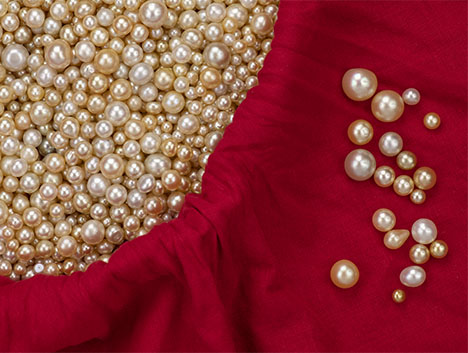
The European markets also saw an influx of pearls from the Americas after Columbus’ third voyage to the New World in 1498 (Bycroft and Dupré, 2019, p. 9). Fisheries located mainly along Venezuela’s Costa de Perlas (Pearl Coast) became a major source of pearls for the Spanish and the Portuguese. Once transferred through Spain or Manila and arriving in the European markets, many of these Caribbean pearls (sometimes called “Portuguese”) could be distinguished by their baroque shape or granular texture. It is highly plausible that some of the “Oriental” pearls circulating in the European markets, as well as in Gregorio’s inventory, were Caribbean. Just as with the case of New World versus Egyptian emeralds, “Oriental” pearls identified as from the Persian Gulf (figure 24) and the Gulf of Mannar, appear to have fetched higher prices. Used arbitrarily by merchants and jewelers of the early modern period, the term orient could refer to a pearl’s “general luster,” its “historic association with the Far East,” or simply its overall excellence (Warsh, 2018, p. 115). As with other gems, dealers’ price-setting based on locality was highly arbitrary.
43For an overview of the history and archaeology of Persian Gulf pearls in the early modern period, see Carter (2012).
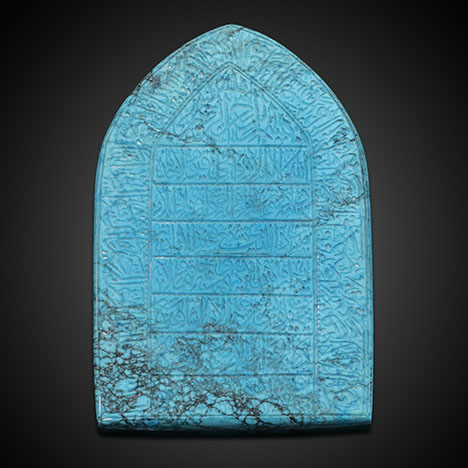
Turquoise and Lapis Lazuli. The turquoise from Gregorio’s gem collection came from Iran, as indicated in the inventory (figure 25). Unlike other popular colored gemstones during the early modern period, turquoise attracted little interest from Europeans. Symbolizing the color of Islam, the “celestial shade of blue,” and representing imperial victory and power (Khazeni, 2014, p. 13), turquoise was highly valued within the Islamic world. It circulated extensively throughout the Mughal, Ottoman, and Safavid empires (Houtum-Schindler, 1884; Shirdam et al., 2021). Persian turquoise entered European markets mainly through the Ottoman caravan trade routes and was often used to decorate rings and other jewelry items.
Reliable information on the Eurasian intercontinental trade of turquoise in the early modern period has hitherto been very scarce due to the lack of primary source material. However, hundreds of archival documents left by the Armenian merchants of New Julfa provide ample evidence of substantial turquoise shipments from Safavid Iran to European cities such as Venice and Livorno in the late seventeenth and early eighteenth centuries. For example, on May 25, 1700, Amirbēk di Vardan shipped (probably from Naples) 390 bags holding a dozen stones each to Rome to a Mr. Mkrtum, who was expected to forward them to Herapet di Martin, most likely in Venice or Livorno.44
Persian turquoise was heavily represented in Gregorio’s inventory: 94,915 cut pieces and 92 pounds of rough. Some, if not all, of the turquoise in Gregorio’s possession would have come from Neyshabur, which was considered the most valuable source of high-quality Persian turquoise (Khazeni, 2014, p. 39). Why Gregorio owned such a large quantity of turquoise is unclear, but the predominance of cut and polished stones suggests the Girach-Mirmans sold them to merchants and jewelers in Italy and elsewhere in Europe. The possible scarcity of turquoise and the relatively limited access of European merchants to the Iranian mines could have motivated the Girach-Mirmans to seize a potentially lucrative market opportunity.
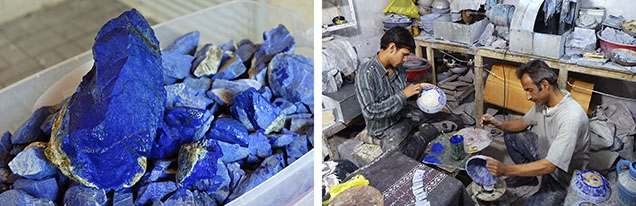
Gregorio also collected lapis lazuli (which the Julfan merchants called lajvard in Persian). He had 4,036 pounds shipped from the famous Badakhshan province in northern Afghanistan by the Girach-Mirman agents, along with turquoise. Lapis lazuli is arguably the oldest commercially mined and traded gem, historically used as a blue pigment and in carvings (Lo Giudice et al., 2009). Gregorio’s lapis lazuli undoubtedly would have come from Sar-e-Sang in the Badakhshan Province (figure 26).
Correspondence between the Girach-Mirman commenda agents trading at multiple locations in Europe and Asia shows that turquoise shipments represented a considerable part of the family firm’s consignments. Because no research has been done on these documents regarding their importance in the gem trade, it is too early to draw conclusions about where the Girach-Mirmans purchased their turquoise. As with the example of the shipment of 390 bags containing a dozen stones each of turquoise within Italy, further research is needed to determine whether the agents bought their turquoise in the major European markets or imported it from Iran through Ottoman trade routes. This point is supported by a letter from Martin to Vardan, written in 1700. Vardan had apparently complained about the high price Martin had set for large turquoise pieces before shipping them to Naples. Martin responded:
You wrote that I had set high prices for the large turquoises. Dear Sir, believe me when I say that those prices are hard to come by here too. Who can get their hands on those [large] turquoises unless they come from our country or via Istanbul, which only happens once a year, and what comes are the small sizes?45
44See Amirbēk di Vardan’s letter to Herapet di Martin, written in 1703. Documenti Armeni Mercantili collection, Busta 3, State Archives of Venice.
45Letter written in 1700, from Herapet di Martin (in Venice) to Amirbēk di Vardan (in Naples), in response to a letter written on June 19, 1700. Documenti Armeni Mercantili collection, Busta 3, State Archives of Venice.
Garnet. Garnet sources are probably the most difficult to pinpoint due to the number of mines and alluvial deposits, both in Europe and India. The garnets in Gregorio’s inventory were identified as Indian by his brother Ěmbrumagha’s inventory, recorded after the latter’s death. Ěmbrumagha’s inventory likely lists the same garnets as Gregorio’s but includes an additional detail, identifying their origin as Indian. While the Girach-Mirman brothers collected Indian garnets, their agents also traded in Bohemian garnets in Venice, as evidenced by a 1699 document in Italian at the State Archives of Venice.46 Bohemian garnets, found in Central Europe, are small but bright red in color. They were mentioned by Georgius Agricola in his 1546 work De Natura Fossilium (see also Reuss, 1838; Kunz, 1893; Oehmichen, 1900; Farges, 1998; Kouřrimský and Hyršl, 2008; Duraj et al., 2015). In the sixteenth and seventeenth centuries, most Bohemian garnets were cut in Freiburg and Waldkirch, with some larger ones cut in Nuremberg. Large-scale cutting began in Bohemia only around 1750 (Schmetzer and Kaiser, 2024), but Bohemian garnets circulated widely in European markets during the eighteenth and nineteenth centuries. Since it is unclear whether the Bohemian garnets mentioned in the inventory were in rough form or already cut, it is difficult to determine where the Girach-Mirman agents sourced their garnets: directly from Germany, or as rough stones from the Venetian markets.
46See a letter written in Venice in Italian in August 1699, which mentioned Bohemian garnets, along with shipments of turquoise and pearls. Documenti Armeni Mercantili collection, Busta 3, State Archives of Venice. See also Revheim (2021) and Schmetzer et al. (2023).
Amber. Gregorio di Girach-Mirman also owned bags of rough amber, probably collected from the Baltic Sea (Grimaldi, 1996; Causey, 2011). Amber, which forms from fossilized tree resin, has washed up on Baltic shores since antiquity. Along with coral, it was one of the very few gems sought after in South Asian and Southeast Asian markets. The Baltic Sea was not only the largest amber deposit but also the source of the most highly traded amber since as early as the Paleolithic era, with routes extending overland to the Mediterranean and east toward the Adriatic Sea (Zaddach, 1861; Runge, 1868). Amber was probably widely available in major European markets, where Gregorio’s agents would have purchased it. As mentioned earlier, the Girach-Mirmans also transported amber from Iran to Tibet.
CONCLUSION
The trail of archival documents left by the Mirman family and their commenda agents is extensive. Preserved mostly at the State Archives of Venice, these documents number more than a thousand but have yet to be thoroughly studied for insights into the family’s involvement in the long-distance gem trade of the early modern period. The remarkable success of Armenian mercantile families resulted in trade and communication networks that connected important gem sources and buyers on several continents, over a span of some 10,000 kilometers. Through family-owned companies such as that of the Girach-Mirmans and prominent dealers such as Gregorio, gem trading practices were shaped that are still relevant today. Gregorio’s gem inventory, discussed in detail for the first time in this article, demonstrates the diversity of early modern gem portfolios. More importantly, his gem collection reveals extraordinary mobility and global reach of gem dealers and agents who transported these luxury commodities from the mining centers to major consumer markets. Whether it was the gems bought by Amirbēk di Vardan and Herapet di Martin in Italian cities or by Hovhannes Ter-Davt‘ian on his lengthy journeys from Iran to Nepal and Tibet during the 1680s and 1690s, it is clear that the Mirman agents operated over enormous distances. Through these caravan and maritime routes, Gregorio was able to collect an impressive and truly global portfolio of gems.
Dr. Sona Tajiryan is a historian specializing in the early modern (ca. 1500–1800) global history of luxury trade, with a particular focus on gem dealing. She completed a two-year postdoctoral fellowship at GIA and currently serves on the board of the Armenian Jewellers Association speaking on various topics covering the trade history of diamonds, colored stones, and pearls.
Dr. Sona Tajiryan is a historian specializing in the early modern (ca. 1500–1800) global history of luxury trade, with a particular focus on gem dealing. She completed a two-year postdoctoral fellowship at GIA and currently serves on the board of the Armenian Jewellers Association speaking on various topics covering the trade history of diamonds, colored stones, and pearls.


