
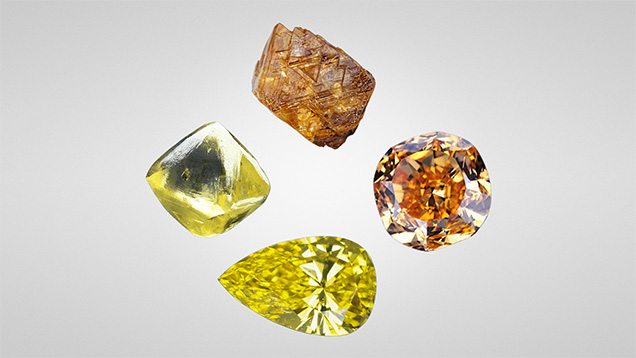
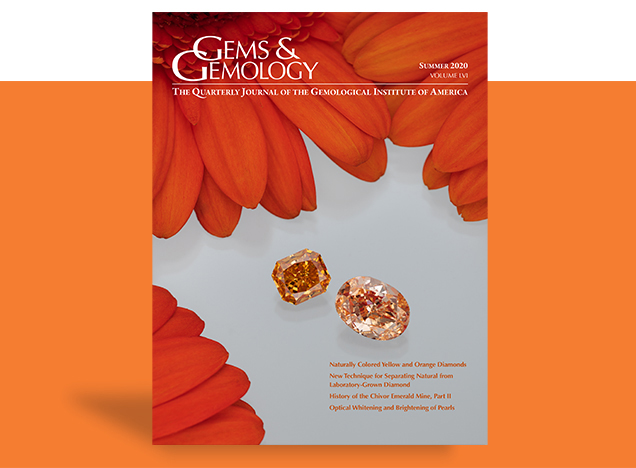
Naturally Colored Yellow and Orange Gem Diamonds: The Nitrogen Factor
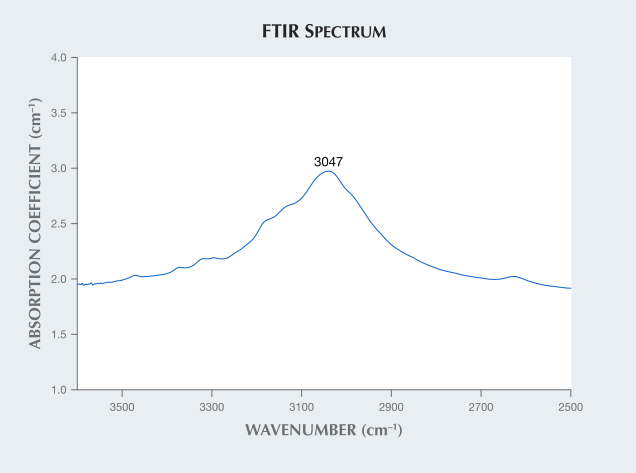
Presents the four major groups of defects responsible for the color in nearly all yellow and orange diamonds.

History of the Chivor Emerald Mine, Part II (1924–1970): Between Insolvency and Viability
Many legends are told about the history of the Chivor emerald mine.
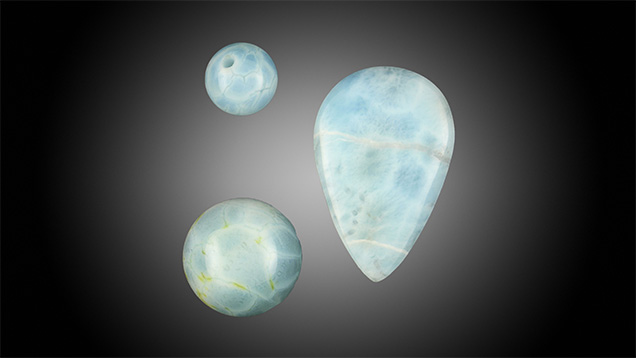
Quench-Crackled Dyed Blue Chalcedony Resembling Larimar
Raman spectroscopy confirms sea-blue beads with a similar appearance to Larimar are actually quench-crackled chalcedony.
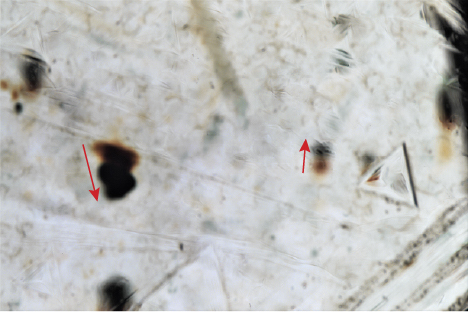
Multiple Radiation Stains Suggest Interesting Geological Residency
A rough diamond crystal weighing 4.05 ct was observed with radiation staining on its surface.
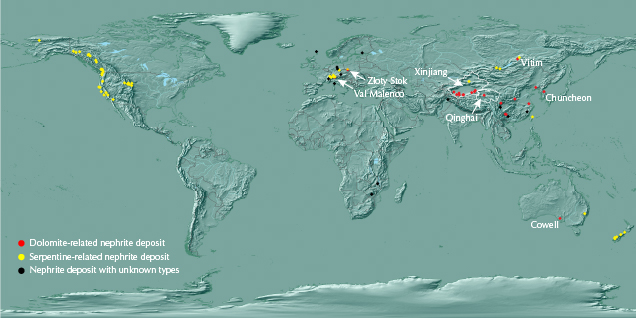
Hydrogen and Oxygen Stable Isotope Ratios of Dolomite-Related Nephrite: Relevance for Its Geographic Origin and Geological Significance
Examines the effectiveness of hydrogen and oxygen isotopes in discriminating dolomite-related nephrites from the four most important occurrences worldwide.
Negative Crystal Containing a Mobile CO2 Bubble in Blue Sapphire Heated with Pressure
A carbon dioxide bubble enclosed within a negative crystal in a pressure-heated blue sapphire moves when gently heated.
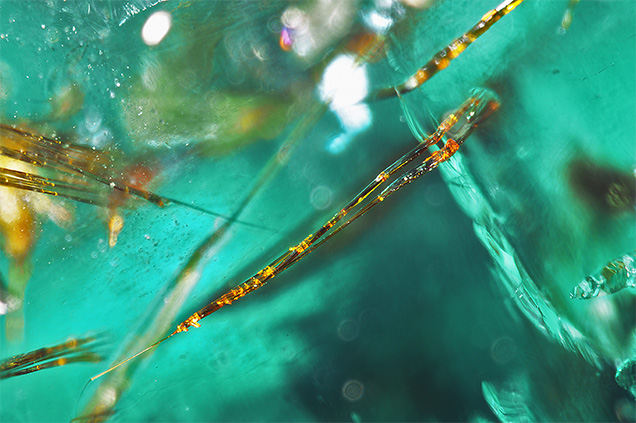
Unusually Shaped Rutile Crystal Inclusions in Russian Emerald
Needle-like inclusions in an emerald crystal from the Mariinsky Priisk mine may be a new indicator of Russian origin.
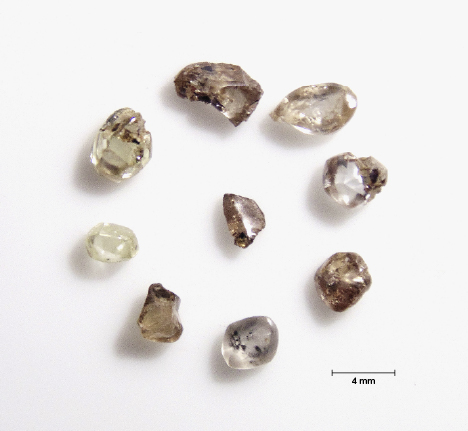
Finders, Keepers: Field Trip to Crater of Diamonds, USA
There’s only one place on earth where the general public can prospect for diamonds directly from a primary kimberlite pipe: Crater of Diamonds State Park.
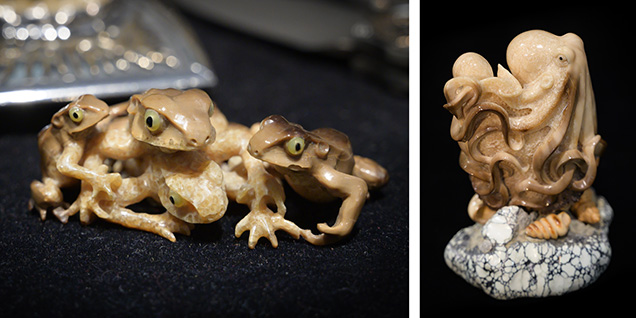
Fossil Ivory Update with Lee Downey
Lee Downey, owner of Artifactual (Tucson, Arizona), spoke with us in early 2020 about his 35 years in the fossil ivory carving trade and the impact of ivory bans on his business.
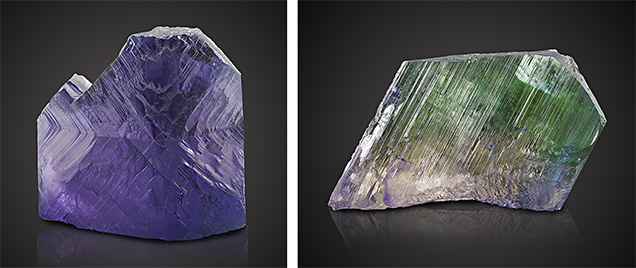
The “Fragility of the Eternal” Kunzite: Origin, Cutting, and Identification
A master gem carver bases his latest design off a stunning stained glass window when attempting the world’s largest known cut kunzite.
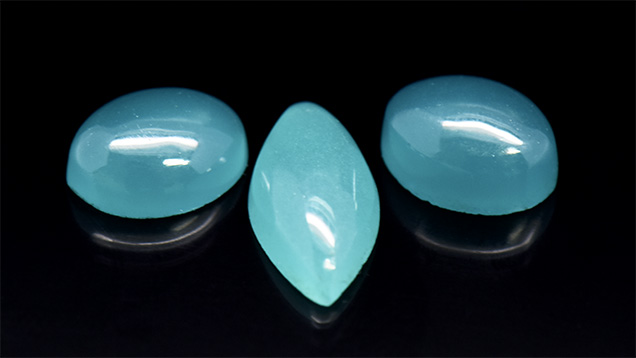
Greenish Blue Glass Imitating Gem Silica
Gem silica, also known as “chrysocolla chalcedony,” is considered the most valuable variety of chalcedony.
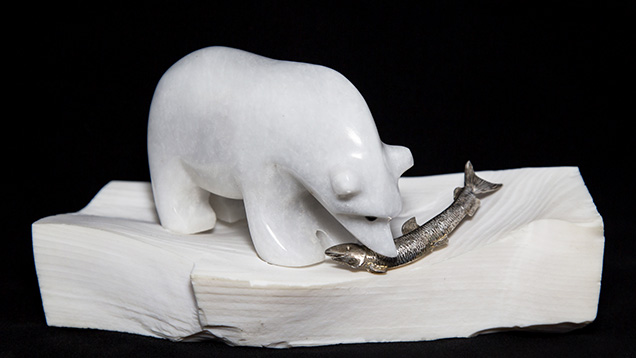
Occurrence of Petrified Woods in the Russian Far East: Gemology and Origin
Scientists in Russia construct an origin story through the analysis of petrified wood popularly used in the souvenir trade.
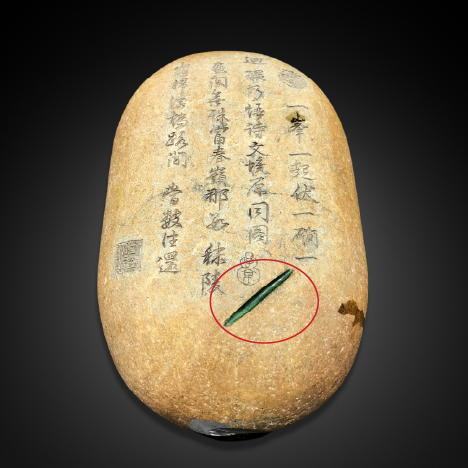
Marble Imitation of Jadeite Rough
A stone submitted as rough jadeite proves upon analysis to be marble, indicative of the increasing use of imitations in the jewelry market.
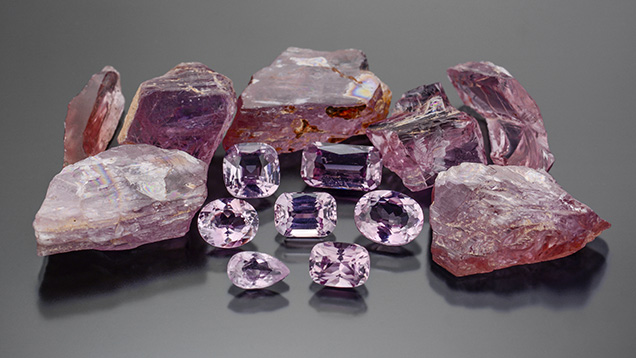
Purplish Pink Diaspore Reportedly from Afghanistan
Diaspore, an orthorhombic aluminum oxide hydroxide mineral with the formula AlO(OH), is a relative newcomer to the jewelry scene, with some stones possessing a captivating ability to change color between pale green, yellow, pink, and purple when viewed in different sources of light.
Novel configurations of VN4 and VN4H defects in diamond platelets: Structure, energetics and vibrational properties
Gu T.T., Ritterbex S., Tsuchiya T., Wang W. (2020) Novel configurations of VN4 and VN4H defects in diamond platelets: Structure, energetics and vibrational properties. Diamond and Related Materials, Vol. 108, Article 107957.
Deep carbon through time: Earth’s diamond record and its implications for carbon cycling and fluid speciation in the mantle
Howell D., Stachel T., Stern R.A., Pearson D.G., Nestola F., Hardman M.F., Harris J.W., Jaques A.L., Shirey S.B., Cartigny P., Smith K.V., Aulbach S., Brenker F.E., Jacob D.E., Thomassot E., Walter M.J., Navon O. (2020) Deep carbon through time: Earth’s diamond record and its implications for carbon cycling and fluid speciation in the mantle. Geochimica et Cosmochimca Acta, Vol. 275, pp. 99-122.
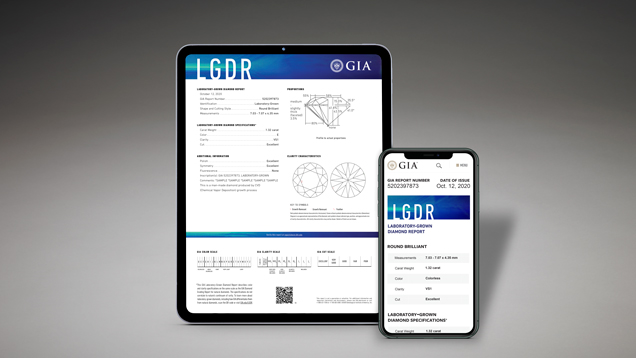
GIA Gets Specific on Laboratory-Grown Diamonds
CARLSBAD, Calif. – Oct. 13 – As consumer interest in laboratory-grown diamonds increases, GIA (Gemological Institute of America) is driving its consumer-protection mission forward by introducing LGDR by GIA, a family of four new digital-only reports for laboratory-grown diamonds with 4Cs color and clarity specifications replacing the descriptive terms and grade ranges previously used on GIA reports for laboratory-grown diamonds.
An evaluation of the potential for determination of the geographic origin of ruby and sapphire using an expanded trace element suite plus Sr-Pb isotope compositions.
Krebs M.Y., Hardman M.F., Pearson D.G., Luo Y., Fagan A.J., Sarkar C. (2020) An evaluation of the potential for determination of the geographic origin of ruby and sapphire using an expanded trace element suite plus Sr-Pb isotope compositions. Minerals, Vol. 10, No. 5, 37 pp.