

Copper-Bearing Tourmalines from New Deposits in Paraíba State, Brazil
Two new deposits of Cu-bearing tourmaline have been found in Paraíba State, Brazil, not far from the original source at Mina da Batalha.
Ruby and Sapphire from the Tan Huong-Truc Lau Area, Yen Bai Province, Northern Vietnam
Primary and secondary deposits in the Tan Huong–Truc Lau area of northern Vietnam’s Yen Bai Province have supplied rubies and some sapphires for more than a decade.
Tsavorite and Other Grossulars from Itrafo, Madagascar
Since 2002, tsavorite and other grossular varieties have been recovered from a primary deposit at Itrafo, a village in the Andrembesoa area of central Madagascar.
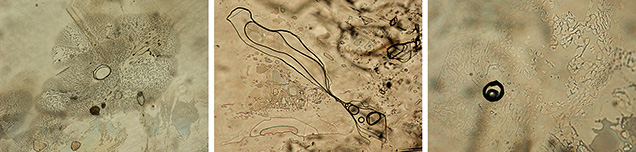
Glassy Melt Inclusions in Sapphires from Montana
Two-phase inclusions are investigated in alluvial sapphires from deposits in Montana.
The Gujar Killi Emerald Deposit, Northwest Frontier Province, Pakistan
Over the last decade, Pakistan has developed into an important source for many gem materials. A number of localities have been identified for emeralds in particular.
A Historic Turquoise Jewelry Set Containing Fossilized Dentine (Odontolite) and Glass
Investigating a set of six antique brooches set with diamonds and light blue cabochons.
“Paraíba”-Type Copper-Bearing Tourmaline from Brazil, Nigeria, and Mozambique: Chemical Fingerprinting By LA-ICP-MS
Gem-quality bright blue to green “Paraíba”-type Cu-bearing tourmaline is now known from deposits in Africa (Nigeria and Mozambique), in addition to three commercial localities in Brazil (in Paraíba and Rio Grande do Norte States).
Abstracts; Spring 1994
This article, from the Spring 1994 issue of Gems & Gemology, is a compilation of abstracts of important gemology-related articles published outside of Gems & Gemology.
From Single Source to Global Free Market: The Transformation of the Cultured Pearl Industry
Over the past 15 years a combination of market forces, environmental events, and scientific research has radically changed the cultured pearl industry.
蛍光性観察を使用したHPHT処理ダイヤモンドの分析
Evaluates a potential method of visually identifying HPHT-treated diamonds using microscopy to observe intense fluorescence at the facet edges and junctions.
Ruby and Pink Sapphire from Aappaluttoq, Greenland: Status of Ongoing Research
An exploration of the distinction between jadeite and omphacite, plus GIA's current policy concerning the definition of these stones.
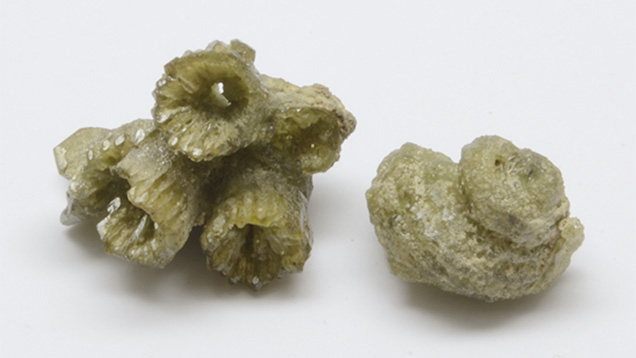
Demantoid Garnet Fossil Pseudomorphs
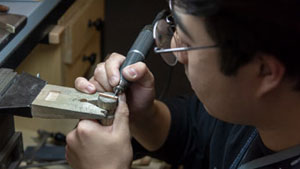
EDUCATION
Whether you’re starting a new career or taking the next step in your professional journey, a GIA education is considered the pinnacle of training and professional development in gems and jewelry. We teach using the latest research, technology, and time-tested skills, while instilling the importance of professional integrity in our students. A true mark of global distinction, a GIA credential is a symbol of knowledge and trust.
Need-Based Scholarships Offered by GIA Year-Round
GIA’s industry-leading and globally-recognized diploma and certificate programs educate professionals with the skills needed for success in the gem and jewelry industry.
Faceting Transparent Rhodonite from Broken Hill, New South Wales, Australia
Transparent rhodonite is considered one of the most difficult of all gems to facet because of its perfect cleavage and brittle, uneven fracture.
Sapphires from Thammannawa, Kataragama Area, Sri Lanka
The February 2012 discovery of high-quality blue sapphires at Thammannawa near Kataragama in southeastern Sri Lanka has intensified gem mining and exploration in the surrounding area and all over the country.
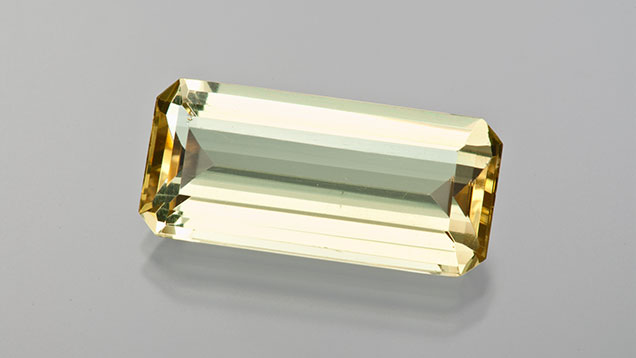
GIAのGübelin宝石プロジェクト:様々な宝石、アンブリゴナイト - アキシナイト
Among the collection assembled by Dr. Edward Gübelin are a number of uncommon gemstones from many worldwide localities.
.jpg "YMAL GIA Ed")


